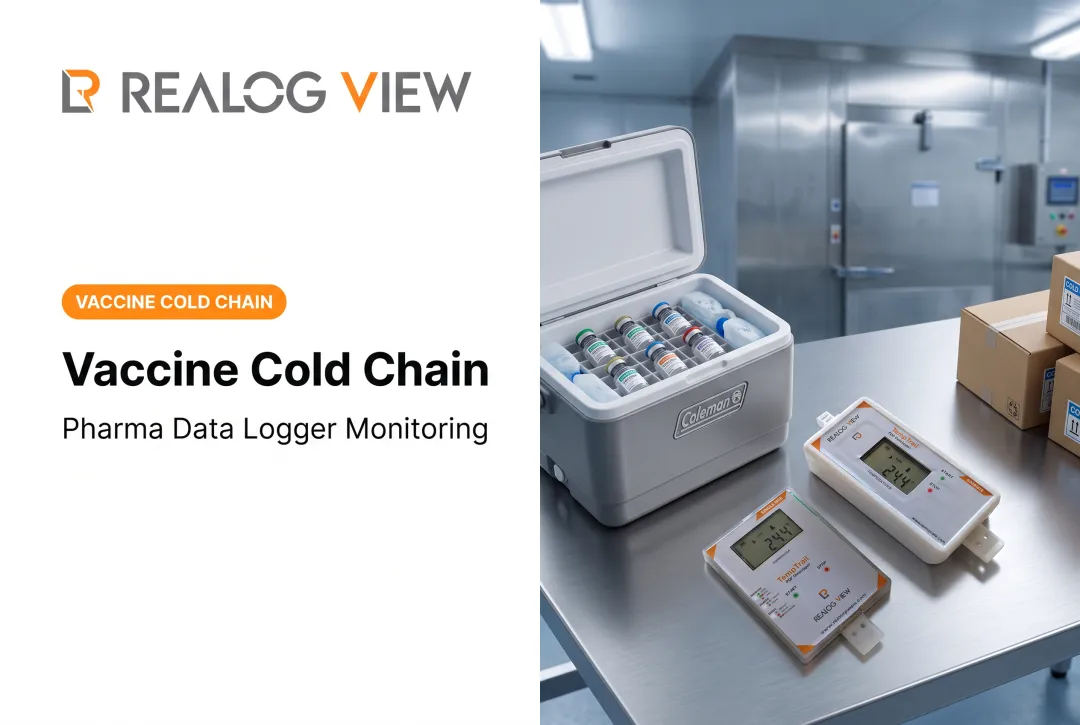
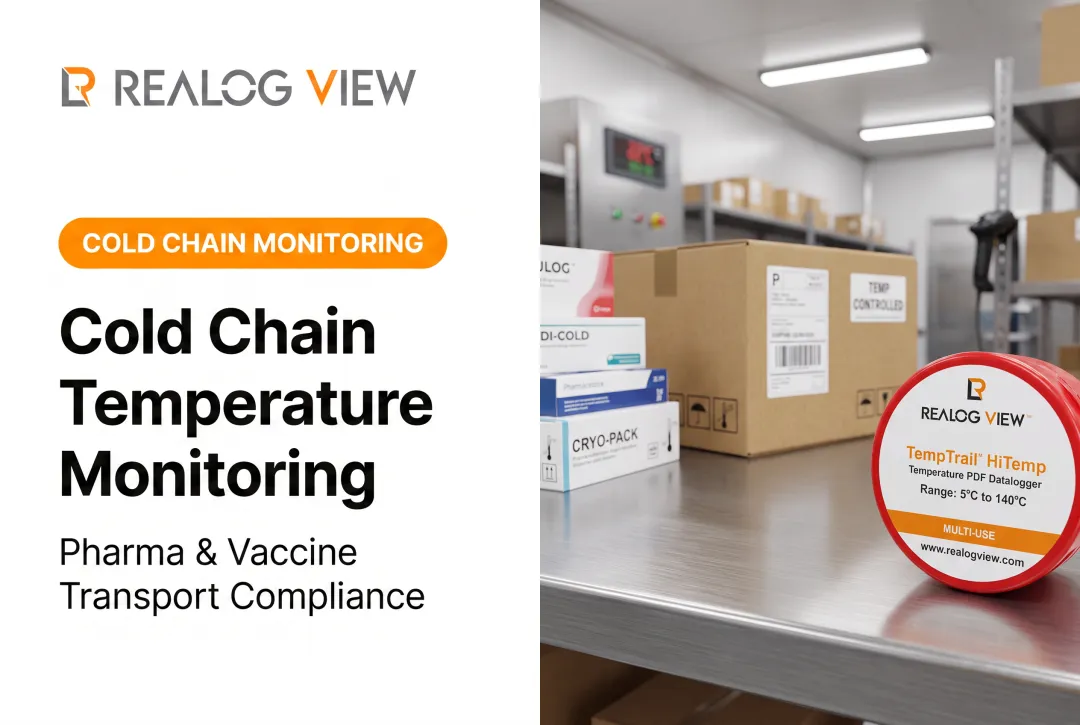
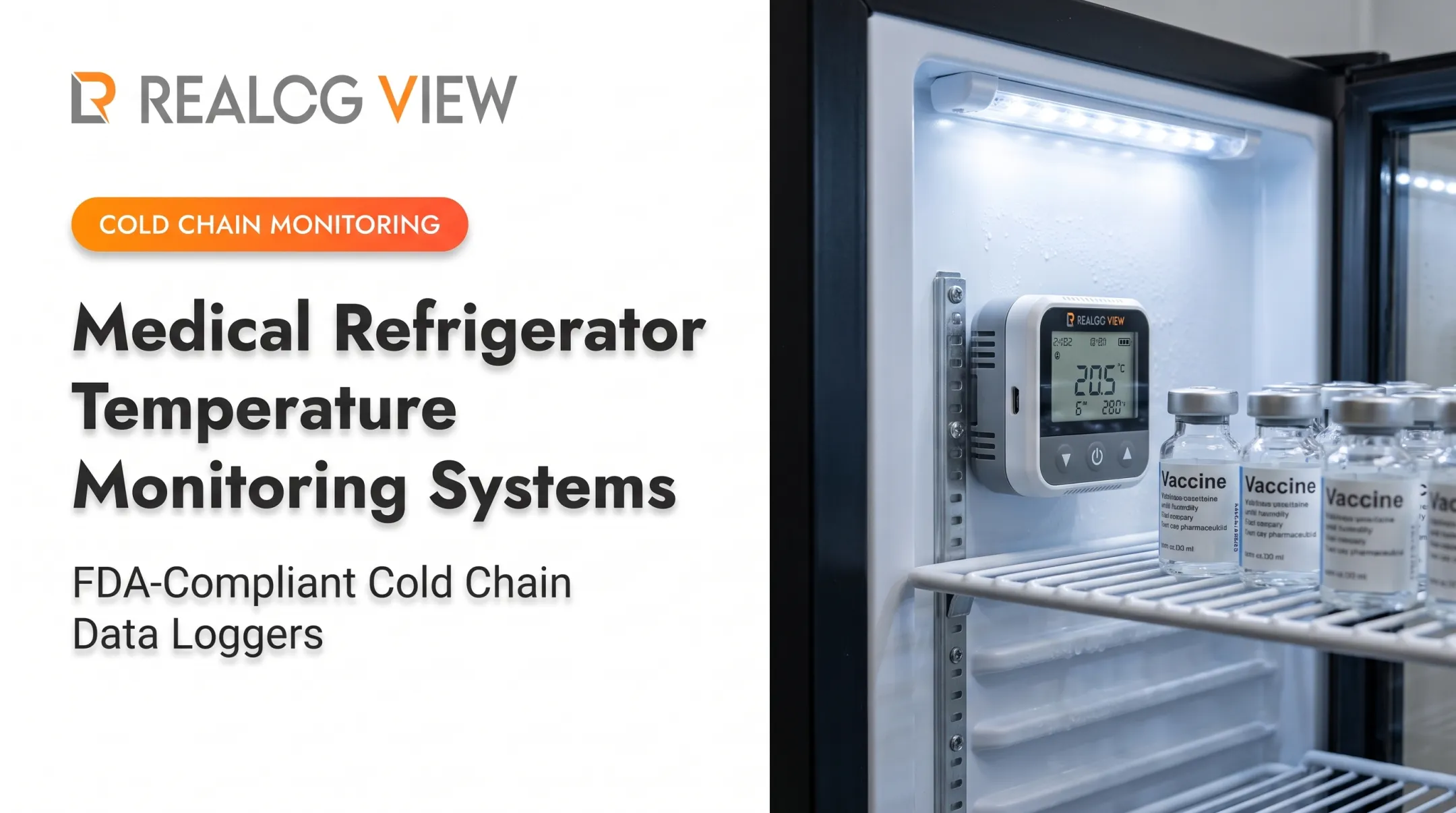
Cold chain integrity isn't one party's job. Manufacturers, distributors, and providers each hold a piece of the chain, and a single weak link can undo everything upstream of it.
This guide walks through what CDC actually requires, what a compliant temperature monitoring device (TMD) needs, and how to build a monitoring program that survives an audit.
Key Takeaways
- Cold chain failures can silently destroy vaccine potency with no visible warning signs
- CDC requires continuous monitoring, calibrated devices, and 3-year data retention for VFC compliance
- Automated digital data loggers catch far more excursions than manual twice-daily checks
- Software-free, FDA 21 CFR Part 11 compliant loggers simplify compliance without an IT team
What Is Vaccine Cold Chain Monitoring?
The vaccine cold chain is the unbroken temperature-controlled path a vaccine travels: from the manufacturer's facility, through distribution and transit, into provider storage, and finally to the patient. Break that chain at any point, and potency is at risk.
Vaccine cold chain monitoring is the continuous recording of temperatures along that path. Data loggers create a verifiable record at each handoff so teams can accept, quarantine, or reject product based on evidence—not guesswork.
Most vaccines need to stay between 2°C and 8°C (36°F to 46°F), per CDC's storage and handling guidance.
Ultra-cold products, including many mRNA vaccines, require far colder conditions. CDC's current chart lists ultra-cold freezer storage at -90°C to -60°C. Always check the manufacturer's package insert for product-specific ranges rather than assuming one universal number.
Why the Cold Chain Is So Fragile
Liquid vaccines containing an aluminum adjuvant lose potency permanently once frozen. There's no recovering from it. CDC is direct about this: visual inspection can't reveal the damage, and exposed vaccines shouldn't be administered unless public health authorities or the manufacturer confirm they're still viable.
Room-temperature exposure risk is product-specific rather than universal. Some vaccines tolerate brief excursions; others don't. That variability is exactly why guessing is a bad strategy. Monitoring data, not assumptions, should drive the decision.
Key Points in the Chain Most Prone to Failure
CDC flags four high-risk stages:
- Manufacturing storage — before the vaccine ever reaches distribution
- Transit and shipping — the least controlled environment in the entire chain
- Receiving and unpacking — deliveries left unattended or unopened boxes sitting too long
- Provider storage — dormitory-style refrigerator units are a particular freezing risk

CDC specifically warns against leaving delivery containers unattended and recommends checking any included cold-chain monitor for transit excursions immediately upon receipt.
CDC Requirements for Vaccine Temperature Monitoring
CDC's Pink Book (Chapter 5) is the reference auditors use to evaluate compliance. Auditors treat it as the binding standard, not optional guidance. Required TMD features include:
- Buffered probes (glycol, glass beads, sand, or Teflon) that reflect actual vaccine temperature, not just air temperature
- Accuracy of ±0.5°C or better
- Logging at least every 30 minutes
- High and low alarms
- Current, minimum, and maximum temperature display
Why 30-Minute Logging and 3-Year Retention Matter
The Pink Book states that CDC recommends, and VFC requires, a digital data logger set to record at minimum every 30 minutes. Records then need to be kept for three years, unless state law requires longer. Auditors don't stop at a single bad reading. They look for patterns: repeated near-misses, recurring equipment issues, and trends that predict future failures. A logger that overwrites old data erases the evidence they need.

How Often Does CDC Require Monitoring?
CDC expects continuous, around-the-clock monitoring with a digital data logger capturing readings at least every 30 minutes—not once- or twice-daily manual checks alone.
Vaccines for Children (VFC) Compliance Basics
Those same monitoring rules sit at the center of VFC participation. VFC supplies ACIP-recommended vaccines at no cost to enrolled providers, per CDC's VFC program page. Enrollment runs through state or local immunization programs, and site visits review storage and handling practices directly. VFC providers need a DDL with a digital display and buffered probe, plus documented temperature checks that match program rules:
- Continuous logging at least every 30 minutes
- Review and documentation of current, minimum, and maximum readings at the start and end of each clinic day
- Retention of temperature records for three years (or longer if state law requires) Fall short on TMD standards, and program eligibility itself is on the line.
Choosing the Right Temperature Monitoring Device
CDC recommends automated, continuous monitoring over manual twice-daily checks, and the data supports that recommendation. A CDC-sponsored study analyzing 243 digital data loggers in real provider storage units found:
- Twice-daily current-temperature checks (no min/max) detected only 4.8%-6.4% of simulated excursions
- Once-daily min/max checks caught 27.8%-96.6%
- Twice-daily min/max checks caught 34.8%-96.7%

No manual-only practice consistently caught everything. The study's authors concluded that continuous monitoring provides the most complete picture available.
Must-Have Device Features
When evaluating a temperature monitoring device (TMD), look for:
- Calibrated buffered probes for accurate vaccine-representative readings
- Programmable high/low alarms and configurable logging intervals
- Tamper-proof, sealed construction for audit-ready reliability
- User-replaceable batteries with long shelf life for uninterrupted monitoring
Why Software-Free Devices Simplify Compliance
Small clinics and pharmacies rarely have dedicated IT staff. A logger that requires proprietary software, driver installs, or cloud accounts adds friction exactly where you can least afford it.
Realog View's temperature and humidity data loggers generate PDF and CSV reports automatically over a USB connection, with no external software required.
Devices like the TempTrail Glacial cover -85°C to +70°C for ultra-cold vaccine and biologic storage, while the standard-range Display and Rh models cover -30°C to +70°C for typical refrigerated vaccines. Both lines are FDA 21 CFR Part 11 compliant and built with tamper-proof IP67-rated enclosures, so the data you pull for an audit is the data that was actually recorded.

One practical check: if a vendor claims ISO 17025 or NIST-traceable calibration, confirm the certificate directly rather than assuming. Not every logger documents this the same way, and audit-ready data depends on knowing exactly what backs your calibration claim.
Risks and Real-World Consequences of Cold Chain Failures
According to the CDC, temperature excursions can compromise vaccine effectiveness even when nothing looks visibly wrong. That invisibility is the real risk: problems go unnoticed until it's too late to fix them.
A 2022 audit of a Louisville, Kentucky VFC provider found inaccurate min/max entries in 14 of 19 temperature logs reviewed. The errors slipped through because logs weren't periodically checked for accuracy before state submission, per the Louisville Office of Internal Audit report.
Consequences of a real excursion typically include:
- Compromised patient protection from a weakened or absent immune response
- Direct financial loss from discarded inventory
- Revaccination logistics, including patient outreach and rescheduling
- Regulatory citations that can jeopardize VFC program eligibility
Undetected excursions are far more common among providers relying on manual-only checks, which lines up with the simulation data above.
Best Practices for Implementing a Monitoring Program
A reliable monitoring program is straightforward to build if you follow a clear sequence and stick to it.
- Assess your current storage setup. Identify which units lack proper temperature monitoring devices (TMDs) or rely on manual checks alone.
- Select a CDC-aligned continuous monitoring system. Prioritize buffered probes, ±0.5°C accuracy, and 30-minute logging.
- Validate the new system against manual checks for 30 days before you fully retire old procedures.
- Establish alert protocols. Define exactly who receives alarm notifications and write a step-by-step deviation response procedure.
- Train every staff member who handles vaccines. Schedule quarterly refreshers plus onboarding for new hires.

CDC guidance also recommends designating a primary and backup vaccine coordinator. Keep written SOPs at the storage unit so staff can act immediately during a temperature excursion—not only in a shared drive.
Frequently Asked Questions
What is the purpose of vaccine cold chain monitoring?
Vaccine cold chain monitoring keeps doses within manufacturer-specified temperature ranges from production through administration. Without it, potency loss can go undetected until a patient receives an ineffective dose.
How often does the CDC require vaccine temperature monitoring and recording?
Continuous, 24/7 monitoring is required, with data logged at least every 30 minutes. Vaccines for Children (VFC) providers must also review that data hourly.
Which temperature monitoring device does the CDC recommend?
CDC recommends continuous digital data loggers with buffered probes over manual thermometers. These devices offer ±0.5°C accuracy and catch excursions that manual checks routinely miss.
How long must vaccine temperature records be kept?
A minimum of three years, unless your state requires longer retention. This supports both audits and long-term trend analysis.
What happens if a vaccine is exposed to the wrong temperature?
Providers must document the deviation, label affected doses "DO NOT USE," and consult manufacturer stability data or their immunization program. Compromised doses are typically discarded once guidance confirms they can't be used safely.