Introduction
It's 2 a.m. and a blood bank refrigerator's compressor starts cycling erratically. No one notices until the morning shift arrives eight hours later. By then, a full unit of red cells and a rack of temperature-sensitive medications have sat outside their approved range all night.
This scenario plays out more often than most administrators realize. Manual twice-daily logs and stem thermometers depend entirely on staff remembering to check, read the number correctly, and write it down.
Miss one round, and a slow excursion goes undocumented until it's too late.
An HHS Office of Inspector General review found inappropriate temperature exposure at 34 of 45 sampled vaccine providers over a two-week window, with exposed stock valued at roughly $368,820 across 9,173 doses.
This guide breaks down the regulatory landscape, the monitoring system types available today, how often hospitals should actually be checking, and how to pick a system that fits your facility.
Key Takeaways
- Continuous, automated monitoring has replaced twice-daily manual checks as the standard in hospitals
- FDA 21 CFR Part 11 requires controlled access and audit trails for electronic temperature records
- Options span basic thermometers and freeze indicators to software-free PDF loggers and cloud networks
- Match the system to facility size, storage type, and how much IT dependency you want to manage
Why Temperature Monitoring Matters in Hospital Settings
Temperature-sensitive inventory doesn't tolerate guesswork. Vaccines, blood products, and many medications lose potency outside narrow bands, and the damage isn't always reversible or even visible.
The CDC doesn't publish a single universal potency-loss percentage, since the impact depends on the specific product, how far outside range it drifted, and for how long. That's precisely why continuous, documented monitoring matters: it gives facilities the exposure duration and severity data needed to make an evidence-based call on whether inventory is still usable, rather than guessing or discarding out of caution.
Storage Ranges Vary by Inventory Type
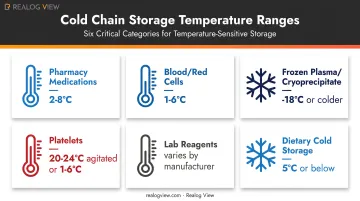
Hospitals rarely manage one refrigeration standard. Each department typically follows its own range:
- Pharmacy medications: 2–8°C (36–46°F), the standard refrigeration definition used across pharmacy practice
- Blood and red cells: 1–6°C
- Frozen plasma and cryoprecipitate components: -18°C or colder
- Platelets: 20–24°C with continuous agitation, or 1–6°C depending on the product
- Lab reagents and specimens: No universal range; manufacturer instructions govern
- Dietary cold storage: 5°C (41°F) or below for time/temperature-controlled food
The Real Cost of Getting It Wrong
Beyond the OIG exposure findings above, that review also found discrepant temperature records at all 45 providers, with 38 having at least one thermometer that wasn't calibrated as required. Fourteen freezers and 23 refrigerators lacked a centrally placed thermometer entirely.
Inaccurate equipment and inconsistent recording are built into manual processes. Add a power failure or a door left ajar overnight, and the risks stack up fast:
- Failed inspections and compliance actions
- Mandatory re-vaccination of exposed patients
- Wasted vaccines, blood products, and medications
- Liability exposure with regulators and patients
FDA and Regulatory Requirements for Hospital Refrigerator Monitoring
There's no single federal law that says "hospitals must monitor refrigerators this way." Instead, facilities work from a patchwork of FDA rules, CDC guidance, USP storage chapters, AABB blood banking standards, and Joint Commission expectations. Which ones apply depends entirely on what's in the fridge.
FDA 21 CFR Part 11 and Recordkeeping Requirements
Part 11 applies when an FDA predicate rule requires a record and that record is kept electronically. It doesn't automatically apply to every hospital log. Once triggered, it demands:
- Controlled access limited to authorized personnel
- Secure, time-stamped audit trails documenting creation, modification, or deletion of records
- System validation capable of detecting invalid or altered entries
- Accurate, retrievable copies in both human-readable and electronic form
Retention periods aren't standardized under Part 11 itself. Blood product records fall under 21 CFR 606.160, which requires retention for at least 10 years after processing, or 6 months past the latest expiration date, whichever comes later.
Drug batch records under 21 CFR 211.180 require at least 1 year past expiration. Facilities often round up and apply a multi-year retention policy across all cold-storage logs to cover every applicable requirement.
Recommended Monitoring Policy Elements
A workable policy typically includes:
- Continuous monitoring rather than periodic spot checks alone
- Defined alarm thresholds tied to the specific product range (vaccine, blood, pharmacy, lab)
- Tiered escalation procedures: who gets notified first, second, and third
- Documented corrective actions for every excursion, no matter how brief
- Scheduled calibration and validation of sensors and recording devices
Policies should also fold in CDC vaccine ranges, AABB blood banking standards, or USP storage terminology depending on inventory — a one-size policy rarely covers a full hospital's cold chain.
Types of Hospital Refrigerator Temperature Monitoring Systems
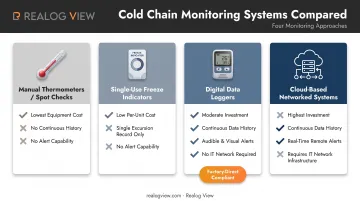
Not every unit needs the same monitoring approach. Here's how the main categories stack up:
Manual thermometers and spot checks rely on staff reading a stem thermometer and logging it by hand, typically twice a day. They're cheap and simple, but there's no retained history between checks and no alert if something goes wrong at 3 a.m.
Single-use electronic freeze indicators trigger a visual signal once a freeze event happens, then they're done. They're useful for a one-time shipment check, not ongoing facility monitoring.
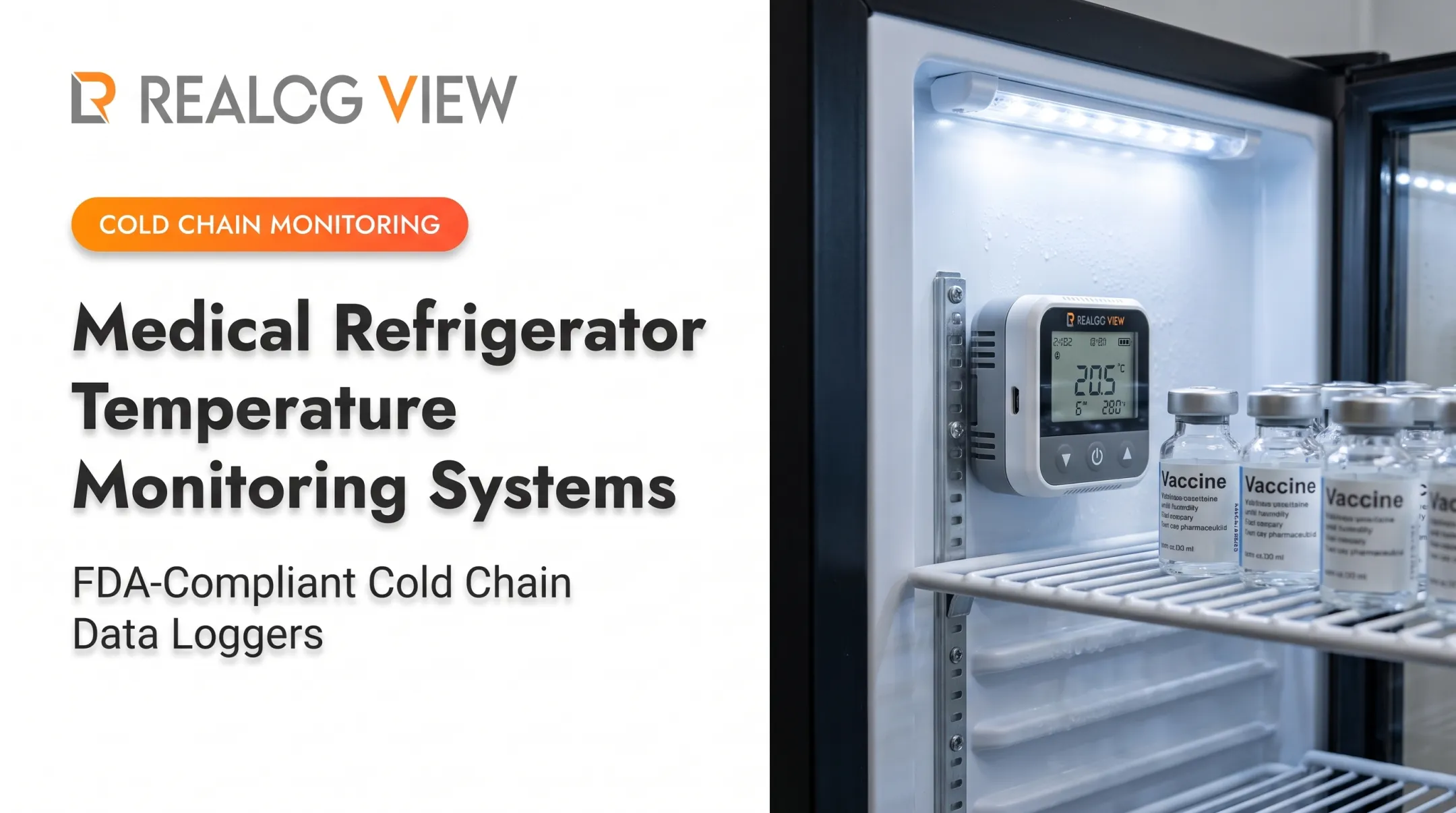
Digital data loggers solve the biggest pain point of manual logs: they capture continuous readings automatically and generate audit-ready PDF and CSV reports without separate software or external probes.
Realog View builds its TempTrail line specifically around this need. Models are FDA 21 CFR Part 11 compliant, housed in tamper-proof IP67/IP68 enclosures, and cover ranges from -85°C up to +140°C depending on the model. That span handles everything from pharmacy fridges to ultra-low cryogenic storage.
Cloud-based and wireless networked systems add continuous remote monitoring with tiered SMS, email, or phone alerts and building management system integration. These suit facilities that need centralized visibility across dozens of units at once.
Which Fits Your Facility?
- Standalone, software-free loggers work well for facilities wanting simplified, IT-independent compliance on individual units
- Networked cloud systems make more sense for larger hospitals needing facility-wide, centralized oversight across many storage points
- Manual checks alone leave overnight gaps and rarely meet audit expectations for vaccine or pharmacy storage
Recommended Monitoring Frequency and Best Practices
The old twice-daily check is no longer enough on its own. A Monte Carlo simulation study found that twice-daily current-temperature readings detected only 4.8% to 6.4% of modeled vaccine excursions. Min/max readings performed better, catching 34.8% to 96.7% depending on unit reliability. Still, no non-continuous method caught everything.
That detection shortfall is why automated systems are now the standard. Continuous loggers capture readings every few minutes around the clock, without relying on staff to remember a check. CDC guidance for vaccine digital data loggers recommends measuring and recording at least every 30 minutes, a cadence no manual process can sustain for months.
Before you rely on continuous logging, stabilize the unit:
- New or repaired refrigerators need a 2–7 day stabilization period before storing sensitive inventory
- Freezers typically need 2–3 days to stabilize
- During stabilization, run manual checks if a digital logger isn't active yet
- Once stabilized, hand off monitoring to continuous automated recording
Choosing the Right Hospital Refrigerator Monitoring System
Picking a system starts with matching features to your actual storage needs, not just the lowest price quote.
Key Features to Prioritize
- Calibrated sensors with accuracy tight enough for the product range (±0.2°C is a reasonable benchmark for pharmacy and blood storage)
- Visual and audible alarms so staff catch excursions immediately, not the next morning
- Tamper-proof, easily sanitized housing, critical in clinical environments where devices get wiped down constantly
- Battery backup so a power blip doesn't erase your monitoring history along with your compressor
- Coverage across your full required range, from standard refrigeration down to sub-zero frozen components
Matching the System to Your Facility
Ask a few honest questions before buying:
- Are you monitoring a single unit or a whole facility network?
- How much IT/software dependency is your team willing to manage day-to-day?
- Will busy clinical staff actually use the system correctly under pressure?
For hospitals that want FDA-compliant records without another software stack to manage, Realog View's TempTrail loggers fit that brief. Staff can configure alarm thresholds, logging intervals, and measurement units directly on the device. Units generate PDF/CSV compliance reports automatically over USB, with no external probes or drivers required.
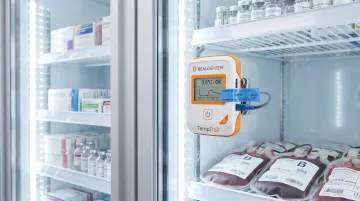
The IP67/IP68 sealed housing holds up to repeated sanitization, which matters in units wiped down multiple times a shift.
Standalone loggers like these deliver validated, audit-ready records per unit without IT overhead. Networked cloud systems add facility-wide dashboards, but they bring more setup and ongoing software dependency. Choose based on whether your priority is simplicity per unit or centralized scale across the facility.
Frequently Asked Questions
What are the FDA requirements for hospital refrigerator temperature monitoring?
FDA 21 CFR Part 11 requires controlled access, tamper-evident audit trails, and reliable retrieval when electronic records are mandated. Retention varies by product: blood records need at least 10 years; drug records typically need 1 year past expiration.
What is the recommended policy for monitoring the temperature of hospital refrigerators?
Recommended policies include continuous monitoring, defined alarm thresholds, tiered escalation for excursions, and documented corrective actions. Build regular sensor calibration and validation into the schedule.
How do I monitor the temperature of a hospital refrigerator?
Options range from manual thermometer logs to digital data loggers and networked systems. Automated continuous monitoring is preferred because it closes the gaps left by manual spot checks.
How often should hospital refrigerator temperatures be checked?
Manual checks are traditionally recommended at least twice daily, but continuous automated logging every few minutes is far more reliable. CDC vaccine guidance recommends recording at least every 30 minutes.
Can I use a standard data logger instead of a full monitoring system?
For a single unit or short-term need, a validated data logger with alarms and secure records can suffice. Multi-unit facilities that need centralized oversight usually require a networked monitoring system.
What happens if a hospital refrigerator temperature excursion goes undetected?
Undetected excursions can spoil vaccines, blood products, or medications, forcing disposal or re-vaccination and triggering compliance failures. Automated alerting with battery backup catches problems in real time, well before the next manual check.