Manual spot-checks and paper chart recorders used to be the standard. That's changing fast. Labs are shifting toward automated, continuous monitoring that catches problems before they become disasters.
This guide covers the system types available, the features that actually matter, compliance requirements, realistic costs, and how to pick the right fit for your lab.
Key Takeaways
- Continuous automated monitoring replaces manual checks that miss excursions between rounds
- FDA 21 CFR Part 11 compliant, PDF/CSV-generating loggers cut software dependency and simplify audits
- Choose by temperature range, connectivity, and data-integrity needs matched to your lab’s storage and compliance profile
- Costs run from under $25 for single-use loggers to thousands for multi-use and facility-wide monitoring setups
What Is a Laboratory Temperature Monitoring System?
A laboratory temperature monitoring system combines sensors, data loggers, and reporting tools that track temperature (and often humidity) continuously, rather than at scheduled intervals. Data loggers themselves are typically small, battery-powered devices with built-in memory and sensors: some standalone, some with remote connectivity. The gap between manual and automated monitoring is bigger than it sounds. Manufacturer guidance suggests labs may have only a 4–6 hour window to react before a freezer failure causes irreversible sample loss—but that's vendor guidance, not a regulatory rule. What's better documented: a 2012 CTRNet emergency SOP requires at least 72 hours of backup cooling capacity and a 24-hour contact list for exactly this reason. If your only check happens once per shift, you're gambling with that window. Equipment typically monitored includes:
- Ultra-low temperature (ULT) freezers
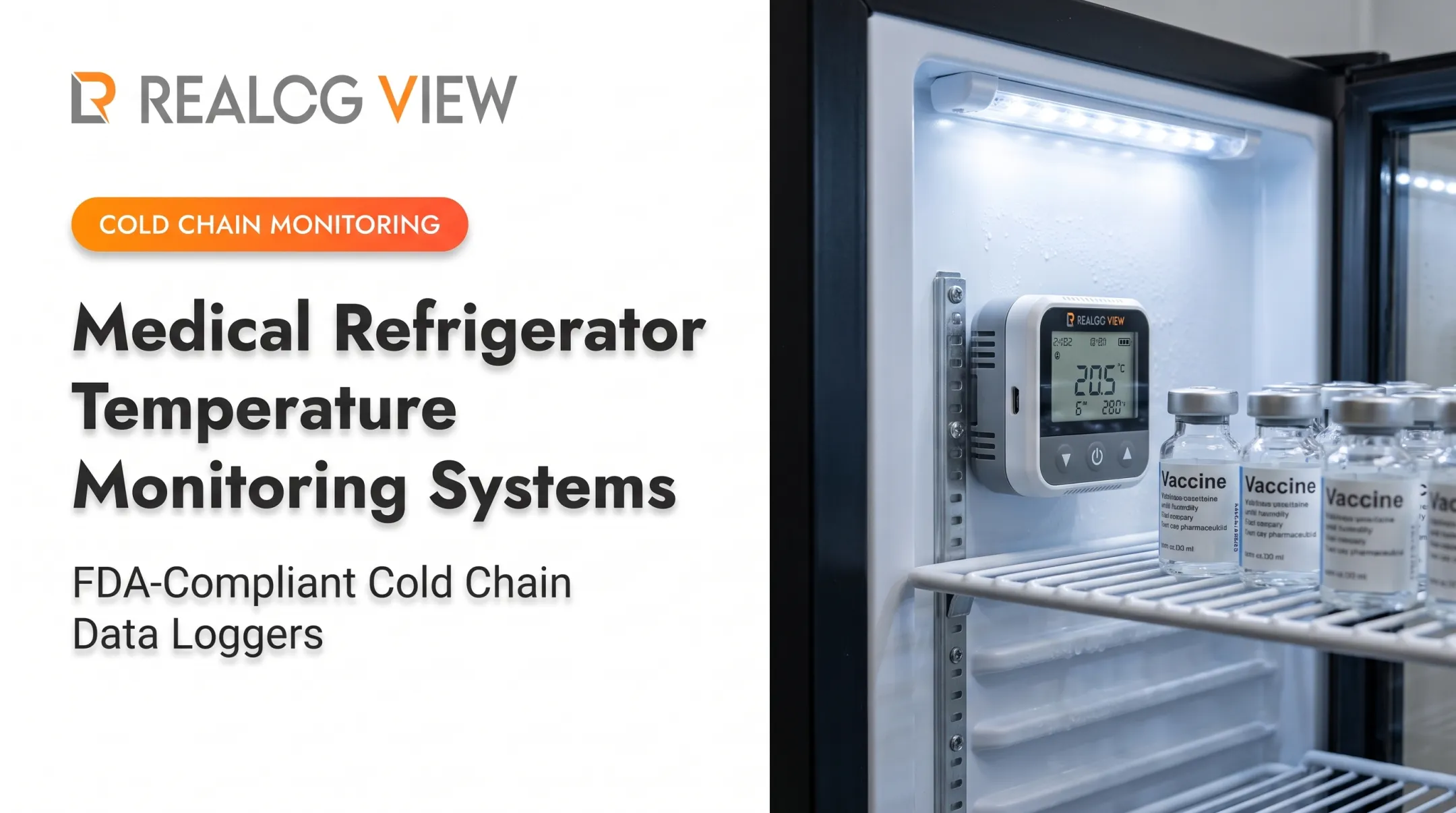
- Refrigerators (2-8°C range)
- Incubators
- Autoclaves and sterilization equipment
- Cryogenic storage units
- Ambient lab environments Systems generally fall into three broad categories:
- Wired or wireless continuous monitors
- Cloud-connected platforms
- Standalone data loggers that need no external software

Types of Laboratory Temperature Monitoring Systems
Lab size, layout, and compliance workload drive which architecture fits. These are the main categories.
Wireless and Multi-Point Continuous Systems
Wireless RF and LoRa-based systems stream readings from many points to a central view. Documented RF setups support up to 50 sensors per local radio bridge; LoRa/LoRaWAN can cover several kilometers in open areas.
They suit large floors with many chambers or freezers. Plan for gateway placement, battery upkeep, and network validation during audits.
Cloud-Based Multi-Site Platforms
Cloud dashboards centralize multi-building or multi-site visibility and automate reporting. That convenience brings software dependency, user-access controls, and recurring subscription costs—factors regulated labs should weigh against simpler logger workflows.
Standalone PDF/CSV Data Loggers
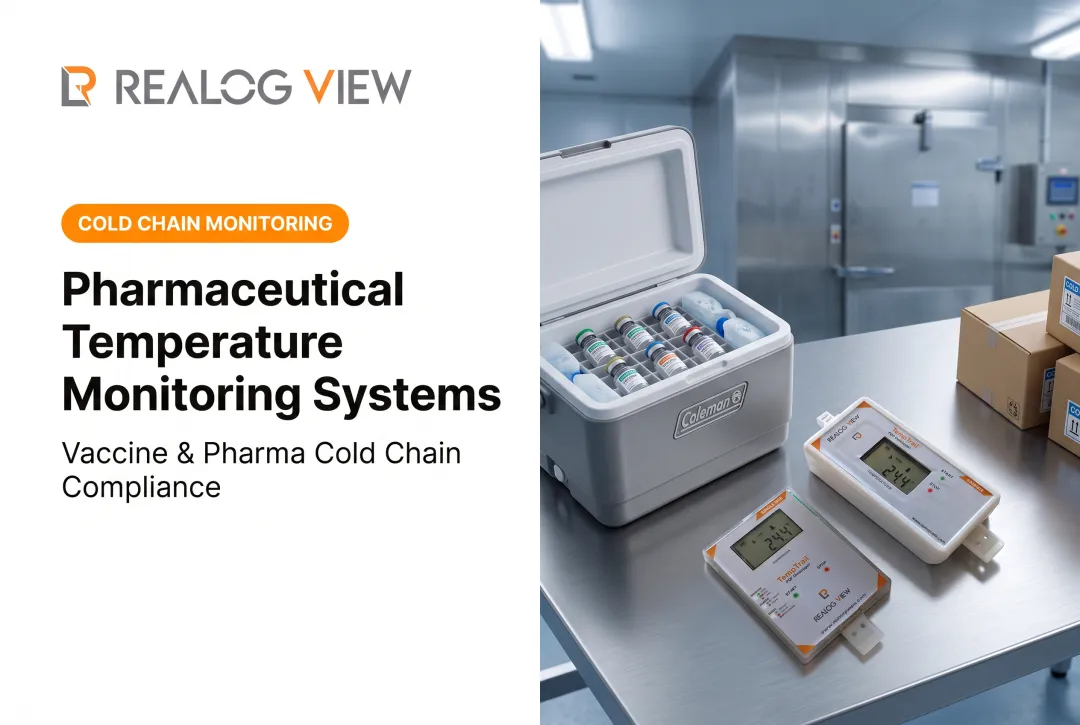
These units log on board and export PDF/CSV without external software or probes—useful when you want audit-ready files without a platform. Realog View’s TempTrail line sits in this category:
- TempTrail Classic — single-use, -30°C to +70°C, up to 11,000 points over 75 days, PDF output
- TempTrail XL — single-use, 32,000 points, up to 220 days, automatic PDF and CSV
- TempTrail Glacial — reusable, -85°C to +70°C, configurable intervals and alarms for cryo and dry ice
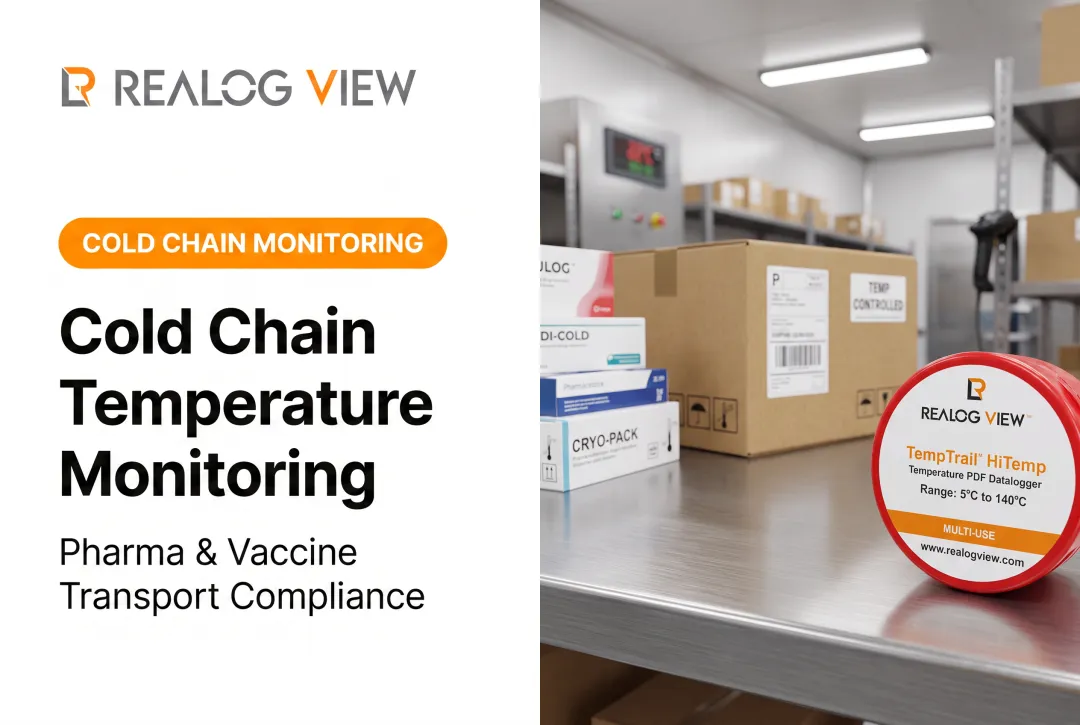
- TempTrail HiTemp — reusable, IP68-submersible, +5°C to +140°C for autoclave validation and oven profiling

Portable and Reusable Loggers
Transport and cold-chain runs favor reusable loggers you can redeploy instead of single-use units. Models such as Glacial with Display add a large LCD and IP67 casing with no external probe, which helps on repeated dry ice or vaccine shipments where crews need a quick on-the-spot read.
Essential Features to Look for in a Monitoring System
Not every logger is built the same. Focus on these five things before buying.
1. Temperature range coverage. One hardware family that spans your full operating range simplifies procurement and training. Realog View's product lines, for example, cover -30°C to +70°C standard, +5°C to +140°C for autoclave work, and -85°C to +70°C for cryo applications.
2. Connectivity and remote access. Staff should check status and pull reports without walking to every unit—especially off-hours. Networked options (Wi-Fi, cellular, LoRa) help in large facilities; standalone loggers should offer fast USB or local report access without proprietary software.
3. Data integrity and traceability. Look for:
- Tamper-proof, sealed IP67/IP68 housings
- Automatic PDF/CSV report generation
- Time-stamped, non-editable records
4. Configurable alarms and battery backup. User-configurable thresholds and logging intervals matter more than fixed factory settings. Multi-use models typically allow this; single-use models usually ship with preset thresholds (often 2–8°C for cold-chain shipments). Battery backup keeps recording through power loss so your compliance trail stays complete.

5. Replaceable batteries and simple operation. A logger that needs specialized software to read is a logger someone will eventually ignore. Software-free, USB-based reporting keeps training minimal.
Regulatory Compliance and Data Integrity
Compliance isn't optional in regulated labs, and the requirements vary by what you're storing.
FDA 21 CFR Part 11 governs electronic records and signatures. According to the eCFR text of Part 11, it requires:
- System validation and documented controls
- Accurate, protected record copies and retrieval
- Time-stamped audit trails
For labs handling regulated pharmaceutical or clinical samples, this is often non-negotiable.
Other frameworks that may apply:
- CDC Vaccine Storage Toolkit — recommends a data logger with ±0.5°C uncertainty and at least one backup device
- USP <1079> and <797> — cover storage/distribution practices and compounding-specific temperature monitoring
- GLP (21 CFR 58.63) — requires calibrated, tested equipment with written SOPs
- WHO/ICH guidance — sets three-point calibration standards for temperature mapping
Those record and audit-trail requirements are easier to meet when the logger produces the evidence itself. Automatic, tamper-proof PDF reports cut audit prep time. Instead of exporting data through separate validation software, a compliant logger generates its own record trail.
Realog View's TempTrail Display models produce PDF and CSV files directly through USB, without drivers, which reduces both manual transcription errors and software-validation overhead.
For hygiene-sensitive environments like autoclave rooms or cleanrooms, an easily sanitized, fully sealed design (like the IP68-rated HiTemp housing) matters just as much as the compliance paperwork.
Laboratory Temperature Monitoring System Cost Considerations
Prices vary widely depending on scale and features. Real examples from the current market:
| Logger Type | Configuration | Observed Price |
|---|---|---|
| Single-use USB | Standard range, 40-pack | ~$650-$757 |
| Single-use USB | Budget, 10-pack | ~$173 |
| Single-trip ULT | Cryo-rated | ~$80 |
| Multi-use cryo | -200°C to 50°C probe | ~$330 |

What drives the price:
- Number of monitoring points needed
- Wireless vs. wired connectivity
- Cloud subscription fees (if applicable)
- Compliance and reporting feature sets
Reusable, software-free loggers typically cut long-term costs. One multi-use unit run across dozens of monitoring cycles avoids recurring software licenses and per-shipment single-use buys.
Realog View uses quote-based pricing with volume discounts on inquiry rather than published rates, which is standard for B2B hardware manufacturers.
How to Choose the Right System for Your Lab
Start by mapping your actual needs, not the most feature-rich option on the market.
- Inventory what needs monitoring. List every ULT freezer, incubator, refrigerator, and ambient room, along with their temperature extremes.
- Match logger scale to your facility. A single-room lab may need nothing more than a standalone logger with automatic PDF/CSV reports. A multi-building campus needs enough units to cover every critical asset and a consistent reporting workflow across sites.
- Prioritize proven durability. DO-160G certification and IP67/IP68 ratings show a logger has survived rigorous environmental testing for vibration, moisture, and temperature extremes. That matters in labs with variable or harsh conditions.
- Confirm vendor support. Ask about warranty terms, replacement parts, and documentation. Realog View, for example, builds software-free loggers with user-replaceable batteries and ships user manuals with every unit.
Don't over-buy. A single-freezer lab doesn't need an enterprise monitoring subscription any more than a 20-site pharmaceutical network can run on standalone loggers alone.
Frequently Asked Questions
What is a temperature monitoring system?
A temperature monitoring system combines sensors and data loggers that continuously track and record temperature, alerting staff when readings fall outside a set range. Modern systems automate what used to require manual chart-recorder checks.
What is the best temperature monitoring system?
There's no single "best" — it depends on your lab's range, connectivity, and compliance needs. Reusable, FDA-compliant, software-free data loggers work well for many pharmaceutical and lab settings because they minimize training and IT overhead.
How much does a temperature monitoring system cost?
Single-use loggers run from roughly $20 to $80 each, while multi-use units often cost several hundred dollars. Enterprise cloud-based platforms with multi-site dashboards can run into the thousands, depending on scale.
Why is temperature monitoring important in laboratories?
It protects irreplaceable samples, supports regulatory compliance, and prevents costly product loss. A single undetected excursion can destroy years of research or an entire vaccine shipment.
What types of laboratory equipment require temperature monitoring?
ULT freezers, refrigerators, incubators, autoclaves, water baths, cryogenic storage, and ambient storage rooms all typically require continuous monitoring.
How often should temperature monitoring equipment be calibrated?
Guidance varies by framework. CDC guidance suggests every 1–3 years or per manufacturer schedule, while USP 797 recommends at least every 12 months. Check your specific regulatory framework and the device manufacturer's recommendation.