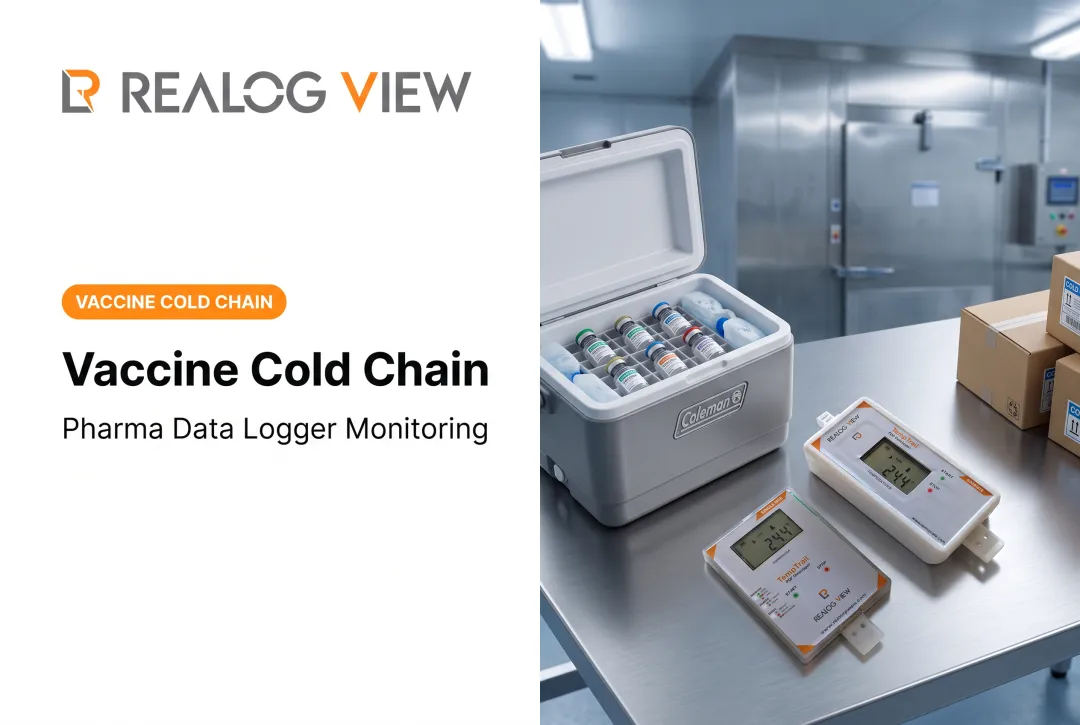
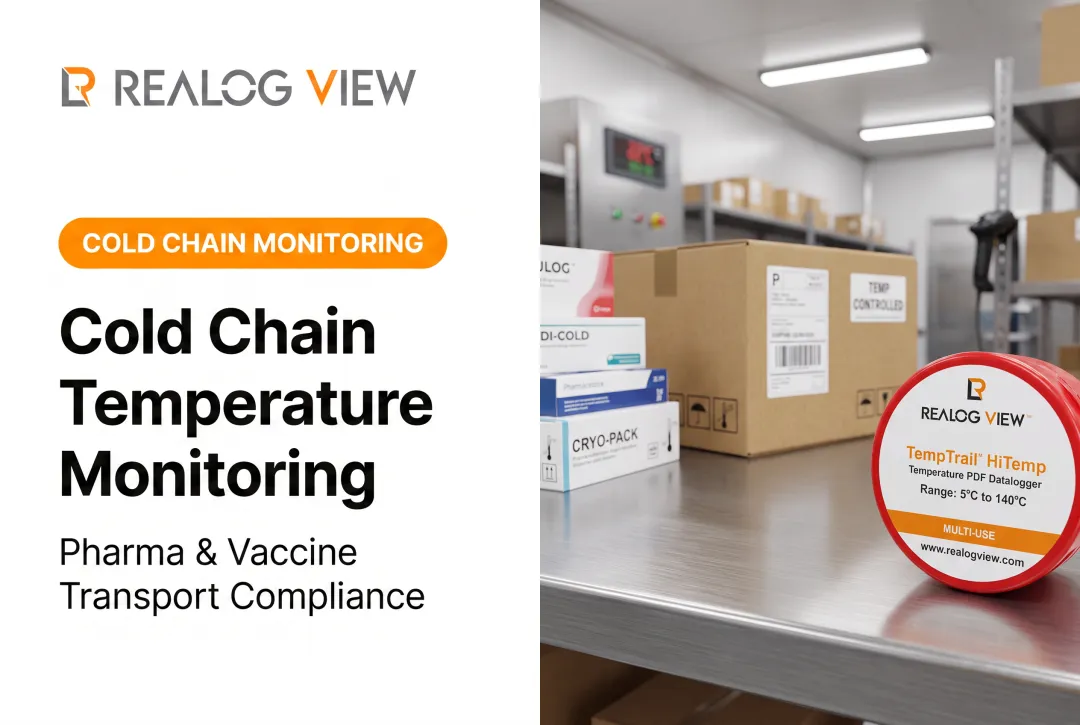
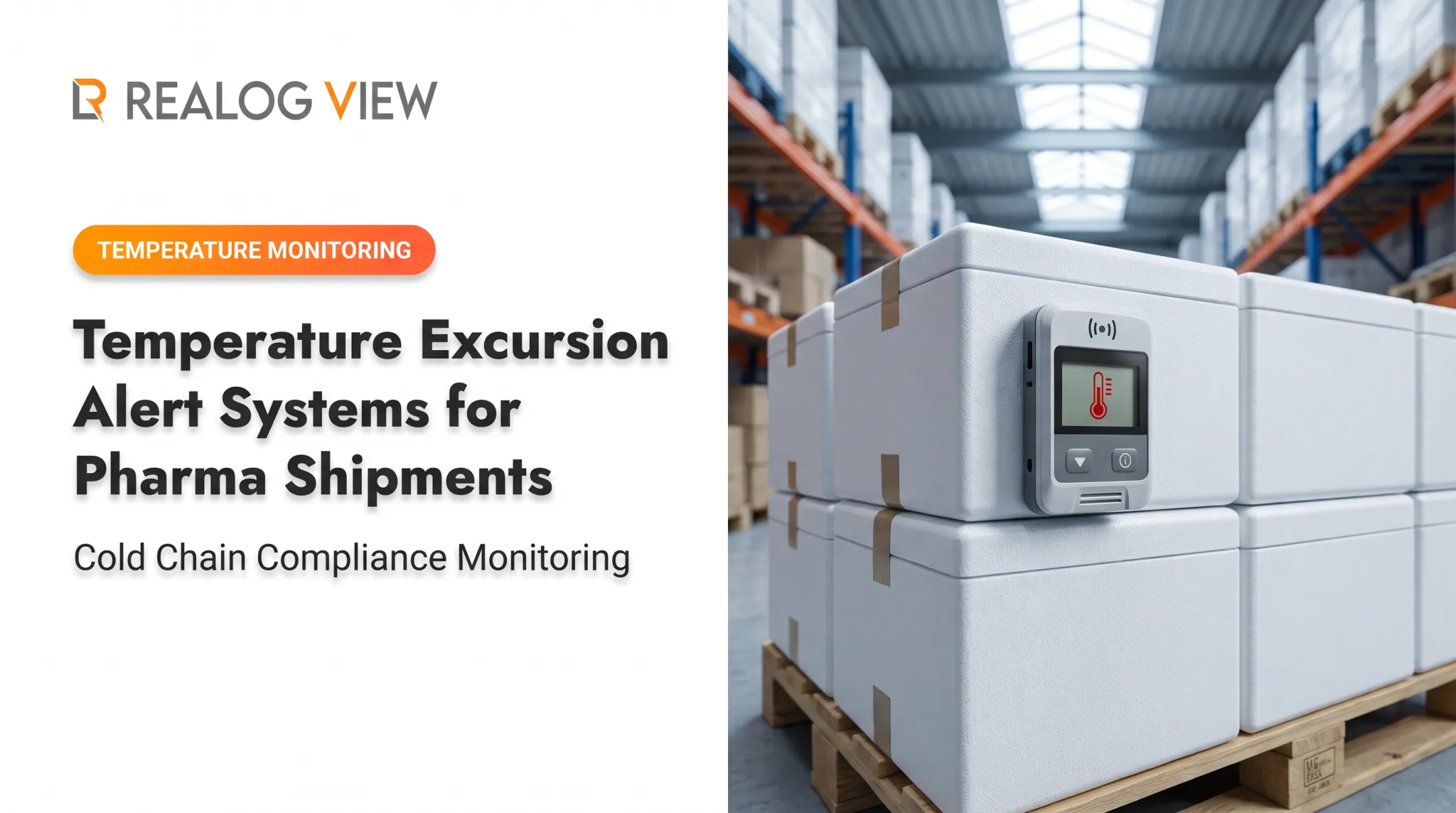
Cold chain compliance is the systematic adherence to regulatory standards and internal protocols that ensure temperature-sensitive products remain safe, effective, and legally salable throughout storage and transportation. Violations threaten public health, invite FDA warning letters or facility shutdowns, and force businesses to quarantine product, conduct stability assessments, and execute recalls. This article defines cold chain compliance, explains governing regulations—FDA FSMA Sanitary Transportation Rule, 21 CFR Part 11, WHO guidelines, HACCP, and USP standards—details infrastructure and technology requirements, covers industry-specific needs, and provides best practices for maintaining documentation, training, and audit readiness.
Key Takeaways
- Continuous temperature control, full documentation, calibrated equipment, and trained staff are required at every custody transfer
- FDA rules assign clear duties to shippers, carriers, and receivers across the chain
- 21 CFR Part 11 governs electronic records through validation, audit trails, and access controls
- Loading, facility transfers, and last-mile delivery are the highest-risk handoffs when controlled environments break
- Continuous data loggers, real-time alarms, and audit-ready PDF/CSV reports prove temperature was held
What Is Cold Chain Compliance? [Complete Definition]
Cold chain compliance is documented adherence to regulatory standards and company procedures that keep temperature-sensitive products within approved ranges across the supply chain.
It differs from cold chain management (logistics, routing, carrier selection). Compliance is about meeting legal requirements, producing audit-ready records, and proving products stayed within labeled specs from manufacturing through final delivery.
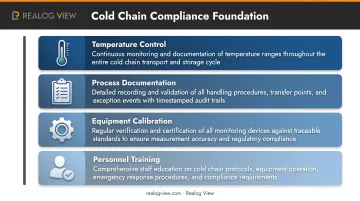
Four core pillars:
- Temperature control — Hold product-specific ranges in storage and transport (there is no single “frozen” or “refrigerated” band for every product)
- Process documentation — Keep time-stamped, tamper-evident records of temperature history, deviations, corrective actions, and training
- Equipment calibration — Verify monitors, refrigeration units, and sensors on a schedule, with accuracy checks on file
- Personnel training — Build and prove competency with initial, role-specific, and refresher training plus documented assessments
Industries That Require Cold Chain Compliance
- Pharmaceuticals — Vaccines, biologics, insulin, blood products, and other temperature-controlled medicines
- Food and beverage — Frozen foods, fresh produce, dairy, meat, poultry, seafood, and prepared meals
- Life sciences — Clinical trial materials, diagnostic reagents, biological samples, and tissue specimens
Why Compliance Has Become More Stringent
Several forces raised the bar at once:
- Longer, more global distribution paths
- Tighter regulatory scrutiny
- Higher public-health stakes after temperature failures
- Better monitoring tools that make full trails practical
Continuous data loggers, wireless real-time monitoring, and automatic PDF reports now support the audit trails regulators expect. Under FDA oversight, product exposed to improper temperature generally cannot return to the supply chain without strong supporting evidence from lab analysis and the handling environment.
Cold Chain Compliance Regulations and Standards
FDA FSMA Sanitary Transportation Rule (21 CFR Part 1, Subpart O)
The rule assigns temperature-control duties to three parties:
- Shipper: Specifies in writing the necessary operating temperature and precooling requirements
- Carrier: Precools vehicles as directed, maintains specified temperatures during transport, and monitors equipment
- Receiver: Assesses shipments for possible temperature abuse upon arrival
Documentation requirements include:
- Shipper procedures and agreements: retained 12 months beyond use or termination
- Carrier training records: required when the carrier assumes sanitary-condition responsibility
- Temperature logs throughout transit
Food tied to a possible material temperature-control failure cannot be sold until a qualified individual determines it remained safe. Noncompliance is a prohibited act under the Federal Food, Drug, and Cosmetic Act.
FDA 21 CFR Part 11: Electronic Records and Signatures
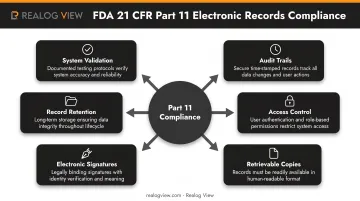
Part 11 applies when electronic records replace records required by predicate rules (such as 21 CFR Part 211 for pharmaceuticals). It governs systems, not individual devices—so a logger’s files only support compliance when the full monitoring and review process is controlled. Compliance requires:
- Validated systems that prove accuracy, reliability, intended performance, and detection of invalid or altered records
- Secure, computer-generated, time-stamped audit trails that independently document creation, modification, or deletion
- Access limited to authorized users through unique credentials
- Retrievable copies in human-readable and auditable formats
- Electronic signatures that include printed name, date/time, and meaning; non-biometric signatures need two components (such as ID and password)
- Audit trails retained as long as the underlying record
FDA does not approve or certify devices as "Part 11 compliant." Compliance depends on how the complete monitoring and record-review system is validated, secured, and controlled—including how temperature data loggers capture, export, and protect electronic records.
WHO Guidelines for Temperature-Sensitive Products
WHO Technical Report Series 961, Annex 9 (2011) provides model Good Distribution Practice (GDP) guidance for time- and temperature-sensitive pharmaceuticals. It calls for:
- Qualified storage and transport equipment
- Thermal mapping to identify hot and cold spots
- Calibrated monitoring devices with traceability
- Alarm systems for temperature deviations
- Documented excursion investigations and dispositions within product-specified limits
Treat this as a global benchmark framework. Local law still takes precedence and sets the enforceable requirements.
Industry-Specific Standards
Beyond federal transport and electronic-record rules, sector standards shape how teams set limits and judge excursions:
| Standard | Scope | Key Requirements |
|---|---|---|
| HACCP (FDA, 1997 guidance) | Food safety | CCPs, validated critical limits, monitoring, corrective action, verification, and records; temperature or time may set a limit |
| USP <1079> (2017) | Drug storage and distribution | Risk-based review of storage and transport practices; informational, not enforceable |
| USP <1079.2> (2024) | Mean kinetic temperature (MKT) | Framework for judging temperature excursions; does not replace labeled storage conditions |
| 21 CFR Part 211 | Pharmaceutical CGMP | Appropriate temperature, humidity, and light control; calibrated instruments under written programs; labels set ranges |
Documentation Requirements for Compliance
Audit-ready documentation typically includes:
- Continuous temperature logs with date, time, and reading
- Equipment calibration certificates (2–3 year intervals typical; replace devices outside ±0.5°C accuracy)
- SOPs for storage, transportation, loading, unloading, and deviation response
- Deviation reports with time, duration, temperature, lot numbers, and root cause
- CAPA records and training files (initial, role-specific, refresher, competency)
Consequences of Non-Compliance
Gaps in temperature control or records can trigger regulatory and legal action:
- FDA warning letters for weak controls or missing records
- Facility inspections, import holds, or consent decrees
- Product seizure or injunction in severe cases
- Lawsuits after contamination incidents
- Loss of licenses, certifications, or distribution agreements
Business damage stacks on quickly:
- Quarantine, stability testing, destruction, and recall costs
- Lost sales and replacement product expense
- Customer distrust, cancelled contracts, and public warning-letter or recall disclosure
Industry-Specific Compliance Requirements
Cold chain rules are not one-size-fits-all. Pharmaceuticals, food, and biologics each set their own temperature bands, records, and release rules—and mixing them up is a common compliance failure.
Pharmaceuticals and Vaccines
Temperature ranges are product-specific and defined by approved labels, not by universal regulatory bands. Common examples include:
- Refrigerated (many products): 2–8°C
- Frozen (various products): SPIKEVAX: -50 to -15°C; other products may differ
- Ultra-cold (certain COVID-19 vaccines): COMIRNATY single-dose vials at -90 to -60°C (CDC ultra-cold equipment range)
Compliance requirements:
- Stability study documentation proving shelf life at labeled conditions
- Deviation investigation protocols with documented root cause analysis
- Validation studies demonstrating packaging maintains temperature for expected transit duration
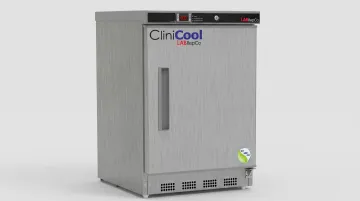
- Excursion quarantine: segregate and label "DO NOT USE," record time, temperature, and lot, then get manufacturer or program disposition before release
Food and Beverage
FSMA Food Traceability Rule (21 CFR Part 1, Subpart S):
- Covers Critical Tracking Events (CTEs) such as harvesting, cooling, packing, shipping, receiving, and transformation
- Requires firms to maintain Key Data Elements (KDEs) for each CTE and produce records to FDA within 24 hours
- Enforcement begins July 20, 2028
- Important distinction: The rule tracks identity and movement; temperature is not identified as a universal KDE, although it remains a food-safety control under other regulations
Pathogen control:
- FDA Food Code (2022 model): Hold TCS food at 41°F (5°C) or below
- Cooling (FDA Food Code): 135°F to 70°F within 2 hours, then to 41°F within 6 hours total
- Shell eggs (21 CFR Part 118): 45°F ambient or below beginning 36 hours after lay
- Commodity-specific seafood HACCP, meat/poultry, and dairy requirements apply
Documentation:
- Continuous temperature records
- Shelf-life studies for different storage conditions
- Pathogen-control validation (for example, time/temperature limits that prevent toxin formation)
Biologics and Clinical Trial Materials
Stricter requirements:
- Tighter temperature tolerances (often ±2°C or narrower)
- Real-time monitoring mandates with immediate alerts
- Chain-of-custody documentation at every transfer
- Specialized validated packaging with qualification studies
- 21 CFR 312 requires accountability for receipt, use, and disposition of investigational products
- ICH E6(R3) (2025): store as specified by the sponsor, protocol, pharmacy manual, and label
Essential Infrastructure and Technology Requirements
Cold chain compliance rests on validated equipment, continuous monitoring, and documented contingencies across storage, transport, packaging, and handling. The requirements below are the baseline most regulated shippers and warehouses must meet.
Storage Facility Requirements
Temperature-controlled warehouses:
- Dedicated refrigerated or frozen rooms with validated cooling capacity
- Thermal mapping studies identifying hot and cold spots before use and after any layout change
- Backup power systems (generators, UPS) with automatic failover
- Environmental monitoring for temperature, humidity, and, where applicable, light
Calibrated refrigeration units:
- Scheduled calibration every 2–3 years or per manufacturer specification
- Replace devices when accuracy falls outside ±0.5°C
- Documented calibration certificates with traceability to national standards
Transportation Requirements
Refrigerated trucks (reefers):
- Validated cooling systems with documented temperature-distribution studies
- Pre-trip temperature verification confirming target temperature achieved before loading
- Temperature-controlled loading docks that limit product exposure during transfer
Insulated shipping containers:
- Validated thermal packaging proven to hold temperature for the full expected transit time
- Proper use of gel packs, phase-change materials, or dry ice
- Transfer protocols limiting time outside controlled environments
Temperature Monitoring Systems
Automated data loggers:
- Continuous recording at defined intervals (such as every 5–10 minutes)
- Storage capacity for the entire journey (often 32,000+ data points)
- High accuracy (±0.2°C typical for standard cold chain; ±0.3°C for ultra-low)
Real-time wireless monitoring:
- Cloud connectivity enabling remote visibility
- Immediate alarm notifications when temperatures deviate from set ranges
- Centralized dashboards for multi-site or multi-shipment oversight
FDA 21 CFR Part 11 compliant systems:
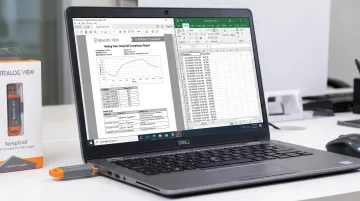
- Devices that generate tamper-proof PDF and CSV reports automatically upon USB connection, without external software
- Audit trails showing data creation, any access, and secure time-stamps
- System validation documenting accuracy, reliability, and tamper detection
- Example: Realog View TempTrail loggers create automatic PDF/CSV reports without external software, support FDA 21 CFR Part 11 compliance, and cover -85°C to +140°C across models
Alarm systems:
- Visual (LCD bell icons, LED indicators) and audible alerts
- Configurable high and low temperature thresholds
- Alert escalation protocols for after-hours or weekend excursions
Packaging and Handling Requirements
- Validated thermal packaging materials with documented performance studies
- Proper conditioning of gel packs (pre-freezing or refrigeration per protocol)
- Packaging qualification for maximum transit time plus a contingency buffer
- Handling SOPs preventing unnecessary door openings, minimizing ambient exposure, and ensuring proper product orientation
Backup and Contingency Systems
- Redundant cooling systems with automatic switchover
- Emergency response protocols for equipment failure, such as moving product to backup storage within a defined time window
- Alternative routing plans for transportation delays, such as diverting to a closer distribution center
- Quarantine procedures for products with suspected temperature excursions: segregate, label, investigate, and obtain disposition before release
Best Practices for Maintaining Compliance
Cold chain compliance holds up when training, documentation, and audits run the same way every day—not only when an inspector shows up. Use the practices below to keep those three pillars consistent across storage, transport, and handoffs.
Establish Staff Training Programs
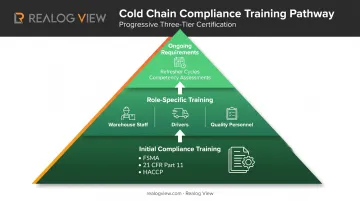
People catch excursions, bad handoffs, and missing records before systems do. Build training in three layers:
Initial compliance training:
- Regulatory framework overview (FSMA, Part 11, HACCP, product-specific requirements)
- Company SOPs for storage, loading, transportation, and deviation response
- Roles and responsibilities at each custody transfer
Role-specific training:
- Warehouse staff: proper storage practices, equipment operation, alarm response, documentation
- Drivers: pre-trip checks, in-transit monitoring, transfer protocols, receiver communication
- Quality personnel: deviation investigation, CAPA, calibration oversight, audit preparation
Ongoing requirements:
- Regular refresher training (annual or biannual)
- Competency assessments with documented results
- Documentation of all training activities with date, attendees, topics, and assessment scores
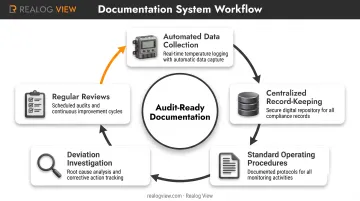
Implement Reliable Documentation Protocols
If it is not recorded, auditors treat it as if it did not happen. Lock in how data is captured, stored, and reviewed:
Automated data collection:
- Continuous data loggers eliminate manual transcription errors
- Automatic PDF and CSV report generation provides timestamped, tamper-evident records
- Redundant or off-site backup of generated reports protects against local data loss
Centralized digital record-keeping:
- Single repository accessible for audits
- Searchable by date, lot, shipment, or facility
- Role-based access controls (view, edit, approve)
Standard Operating Procedures:
- Written SOPs for every cold chain activity: storage, loading, transport, receipt, deviation response, calibration, training
- Version control with approval signatures and effective dates
Deviation investigation:
- Immediate quarantine of affected product
- Root cause analysis using structured methods (5 Whys, fishbone diagrams)
- CAPA implementation with effectiveness verification
- Trending analysis to identify systemic issues
Regular documentation reviews:
- Monthly or quarterly audits of temperature logs, calibration certificates, and deviation reports
- Completeness checks ensuring all required fields are populated
- Continuous improvement based on audit findings
Conduct Regular Audits and Reviews
Audits should find gaps while you can still fix them—not during a regulatory visit. Cover people, process, and equipment on a set cadence:
Internal self-audits:
- Use compliance checklists covering storage, transport, documentation, training, and calibration
- Quarterly or biannual frequency depending on risk and volume
- Assign auditors from outside the audited department for objectivity
Third-party audits:
- Independent assessment by external auditors or consultants
- Annual or biennial schedule
- Benchmark against industry best practices
Equipment calibration schedules:
- Maintain calibration database with next-due dates
- Automated reminders to prevent lapses
- Documented calibration results with certificates filed
Mock regulatory inspections:
- Simulate FDA or state inspection scenarios
- Identify gaps in documentation, facility readiness, or staff knowledge
- Corrective action before actual inspection
Continuous improvement programs:
- Review audit findings quarterly
- Implement corrective actions with assigned owners and target dates
- Track key performance indicators (KPIs): excursion rate, deviation closure time, audit findings per quarter
Frequently Asked Questions
What is cold chain compliance?
Cold chain compliance is adherence to regulatory standards requiring temperature-sensitive products to remain within specified ranges throughout storage and transportation, with complete documentation proving every shipment met labeled conditions. It covers temperature control, calibrated equipment, trained personnel, and audit-ready records.
At what level is the risk of cold chain failure the highest?
The highest risk occurs during product transitions: loading docks, facility transfers, and last-mile delivery, where controlled environments are interrupted and monitoring gaps may exist. These handoffs need written transfer protocols, immediate temperature checks, and documented custody transfer.
What are the four stages of the cold chain?
The four stages are storage at origin, primary transport to distribution centers, intermediate warehouse storage, and final delivery to the end user. Each stage needs validated temperature control, monitoring, and documented handoffs.
Which vaccines need a cold chain?
Most vaccines require cold chain management, typically at 2–8°C. Some products, including certain COVID-19 vaccines, need ultra-low frozen storage before thawing. Always follow the manufacturer’s labeled temperature range for each product.
What happens if cold chain compliance is violated?
Consequences include FDA warning letters, import holds, product destruction, recalls, legal liability, and loss of licenses or distribution agreements. Products exposed to improper temperatures generally cannot be salvaged without supporting laboratory evidence.