The reefer container temperature range is the single most critical spec for any temperature-controlled shipment. It determines whether cargo arrives sellable, whether regulatory seals hold, and whether an insurer pays a claim without a fight.
Here's where most shippers get tripped up: they confuse what a reefer can achieve (equipment capability) with what their cargo needs (the setpoint). These are not the same number, and treating them as interchangeable is how spoilage claims happen.
This article breaks down standard equipment ranges, tolerance limits by cargo type, how temperature actually gets measured and validated in transit, and what happens when a container drifts outside spec.
Key Takeaways
- Standard reefer units run -30°C to +30°C; specialized super freezers reach -60°C
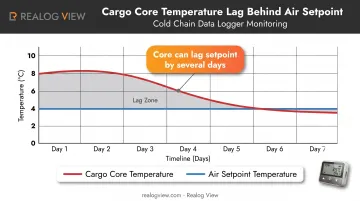
- Setpoint controls air temperature, not cargo core—and the two can diverge for days
- Frozen cargo tolerates about 3°C (5°F) from setpoint; chilled cargo only 0.4°C (1°F)
- Air-temperature logging catches ambient problems but misses conditions inside the pallet
What the Reefer Container Temperature Range Represents
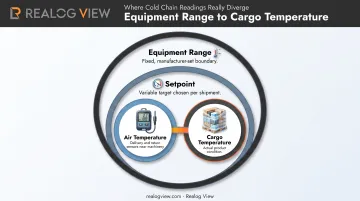
The reefer temperature range is the span of air temperatures a refrigeration unit is engineered to generate and hold. Manufacturers fix it by unit type. The setpoint is different: it's the specific target a shipper selects for a particular cargo, chosen within that engineered range.
Think of the range as the ceiling and floor of what's physically possible. The setpoint is where you actually park the dial.
Here's the part that catches people off guard: the unit's sensors sit near the machinery, monitoring delivery air (air leaving the evaporator) and return air (air coming back after circulating through the load). Neither sensor touches the cargo directly.
Reefers are built to maintain a temperature, not rapidly force cargo down to it. If you load warm product expecting the unit to chill it during transit, you're asking the equipment to do a job it wasn't designed for.
- Range: fixed equipment specification, set by the manufacturer
- Setpoint: variable chosen per shipment, based on cargo and carriage instructions
- Air temperature: what the sensors measure
- Cargo temperature: what actually determines product safety and shelf life
That last distinction matters more than any spec sheet number, and it's the source of most disputes when a claim gets filed months later.
Factors That Influence Reefer Temperature in Real-World Operation
Published equipment ranges assume ideal lab conditions. Field performance is messier. Ambient heat, load pattern, and power continuity all push actual results away from the spec sheet.
A few things reliably move the needle:
- Insulation aging — polyurethane foam loses insulating value over years of service, so older units warm faster and draw more power to compensate
- Defrost cycles — heater-driven defrost briefly halts the evaporator, so the return-air sensor above it records a temporary spike that is normal, not an alarm on its own
- Stowage and airflow — cargo packed above the red load line, or stacked too tightly, blocks air circulation and creates uneven cooling across the container
- Power interruptions — gaps during ship-to-shore transfer, yard moves, or generator switchovers let temperature drift before the unit re-stabilizes
None of these factors appear on a manufacturer's spec sheet. Shippers who plan only to the published range miss real drift—and only in-transit temperature logging shows when it happens.
The Reefer Container Temperature Range: Limits, Tolerances, and Margins
The usable range is bounded twice: once by what the equipment can physically do, and again by what the cargo can tolerate. The second boundary is almost always tighter.
Nominal Operating Range by Container Type
Manufacturer specs vary by unit class:
| Container/Unit Type | Published Range |
|---|---|
| 20 ft / 40 ft high-cube standard reefer | -30°C to +30°C |
| 40 ft high-cube Magnum reefer | -35°C to +30°C |
| Thermo King Magnum Plus | -40°C to +40°C at ambient up to +50°C |
| Maersk StarFreeze (ultra-low) | Down to -60°C for products like frozen tuna |
Source: Maersk's published reefer temperature range specifications
These numbers assume proper power supply, routine maintenance, and a passed pre-trip inspection (PTI). Skip any of those, and the equipment underperforms its own spec sheet.
Allowable Tolerance and Deviation Limits
Cargo tolerance is far narrower than equipment capability:
- Frozen cargo should stay within roughly 3°C (5°F) of setpoint
- Chilled cargo should stay within about 0.4°C (1°F) of setpoint
Bananas are the common exception—they follow unique ripening curves. Both figures come from West P&I's loss prevention guidance on reefer container carriage. The bulletin is explicit: these numbers describe conditions at stuffing, not a green light to run consistently off-target.
Short-term deviations during door-open loading are expected and generally not damaging. Sustained excursions over hours or days are a different problem entirely.
Safe Operating Margin
Carriers build margin between the setpoint and equipment limits for a reason: ambient heat load, defrost cycles, and sensor lag all eat into that buffer before cargo ever feels the difference.
Here's a detail shippers often miss: when warm cargo gets loaded, the core temperature can lag the air setpoint by several days. The unit might read -18°C on the display while the center of a pallet is still several degrees warmer. That lag is exactly why margin exists, and why "set and forget" thinking fails on longer voyages.
Recommended Temperature Ranges by Cargo Type
There's no single "ideal" reefer temperature. The right setpoint depends entirely on what's inside the box.
| Cargo Type | Typical Range | Key Consideration |
|---|---|---|
| Frozen goods (meat, poultry, seafood, frozen dairy) | -18°C (0°F) or below | Biological activity largely stopped |
| Fresh fruits and vegetables | 0°C to +13°C (product-dependent) | Still respiring; needs active ventilation |
| Chilled meat and dairy | Similar chilled band, tighter tolerances | No ripening curve to manage |
| Pharmaceuticals and vaccines | 2°C to 8°C (36°F to 46°F) | Per CDC; avoid excursions above 8°C |
Frozen setpoints are the most straightforward: hold a stable deep freeze and the product stays essentially inert.
Chilled and live cargo spans a wider band. Produce keeps respiring, so it needs active ventilation, not just cold air. Meat and dairy sit in a similar chilled territory with tighter tolerances.
Specialty cargo runs narrower still. The CDC specifies 2°C to 8°C (36°F to 46°F) for refrigerated vaccine storage, per CDC guidance on vaccine storage and handling. Excursions above 8°C risk potency loss over time.
That last category is worth a pause. Standard reefer sensors, built to track air temperature near the machinery, weren't designed with pharma-grade validation in mind.
Regulated shipments increasingly need independent verification layered on top of the container's built-in controller, a point we'll come back to next.
How Reefer Temperature Is Specified, Measured, and Validated
Temperature range isn't just a spec sheet number. It's a written requirement and an ongoing check throughout the journey.
Specification and documentation: Shippers must provide written confirmation of temperature, humidity, and ventilation needs before loading. These instructions get cross-checked during the pre-trip inspection, where the controller's supply and return sensors are tested against each other for accuracy.
Built-in measurement: The container's electronic controller logs delivery air, return air, defrost timing, and setpoint changes automatically. What it doesn't do is measure the cargo itself. Return air is air that's already passed through the load, not a direct read of product temperature.
Independent verification: This gap is why many shippers place dedicated data loggers or probes inside the stow, especially for regulated goods. It's a straightforward fix for a real blind spot.
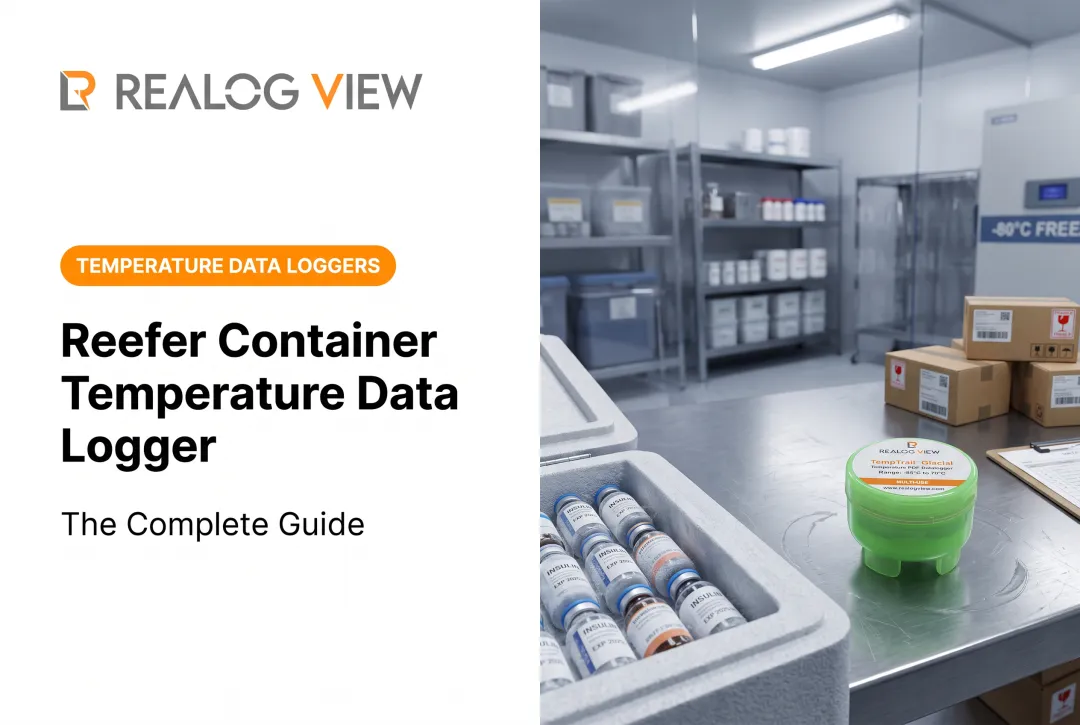
For pharmaceutical, cold chain, and cryogenic-sensitive cargo, independent loggers close that gap. Realog View's TempTrail Glacial monitors ultra-low and cryogenic ranges from -85°C to +70°C and creates an audit-ready record that does not rely on the container's sensors.
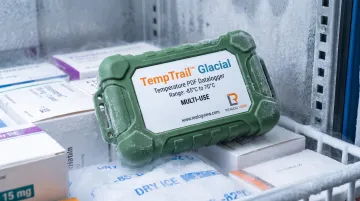
Key capabilities include:
- Automatic FDA 21 CFR Part 11-compliant PDF and CSV reports over USB
- No external software required
- In-stow placement for cargo-environment readings the reefer controller cannot provide
For general cold chain cargo where an in-transit visual check matters, the TempTrail Display line adds a large LCD so crews can read current values without waiting for download.
Field versus lab differences: Manufacturer ranges get tested under controlled conditions. Real transit involves ambient extremes, door openings during transshipment, and power transitions, all of which create gaps between rated performance and what actually happens inside the box.
Implications of Operating Outside the Recommended Range
Exceed tolerance limits, and the consequences follow predictably: accelerated spoilage, premature ripening, freezer burn, or microbial growth, depending on what's being carried.
Here's the trap many shippers fall into: air temperature readings alone can mislead. Air can look stable at the display while cargo core temperature is still drifting.
During a defrost cycle, the reverse happens: a return-air spike shows up that has nothing to do with actual product condition.
Persistent excursions carry real consequences:
- Insurance disputes, particularly when air-temperature logs and cargo condition don't line up
- Regulatory non-compliance, including broken USDA cold treatment seals that require a full restart
- Voided cargo claims when documentation can't prove the product stayed within tolerance
There's a common misconception worth killing outright: a container's maximum published range, say -30°C to +30°C, is not a safe target for any cargo loaded into it. Cargo-specific tolerance is always narrower, and it always takes priority over the equipment's outer limits.
The temperature range is a governing constraint, not a number you set once and walk away from. It demands active monitoring and judgment for the entire voyage.
Frequently Asked Questions
What temperature should a reefer container be set at?
It depends on the cargo. Frozen goods typically run at -18°C (0°F), chilled goods anywhere from -1°C to +15°C. Always follow the shipper's specific carriage instructions.
What is the ideal reefer container temperature for frozen foods?
Frozen foods are typically carried at or below -18°C (0°F). Industry loss-prevention guidance usually allows about 3°C (5°F) deviation from setpoint.
How cold can a reefer container get?
Standard units reach around -30°C. Specialized super freezer units, like Maersk's StarFreeze line, can achieve as low as -60°C for ultra-cold cargo such as frozen tuna.
How do I check reefer container temperature?
Built-in controllers display delivery and return air temperature continuously. For a more accurate cargo-level reading, place portable data loggers or cargo probes inside the stow.
What is the difference between reefer air temperature and cargo temperature?
The reefer’s air sensor measures circulating air near the machinery, not the product itself. Cargo core temperature can lag air temperature by hours or even days depending on load conditions.
Can a reefer container heat as well as cool?
Yes. Most reefer units both heat and cool to hold a setpoint in warm or freezing ambient conditions, though they're designed to maintain temperature rather than rapidly change it.