The WHO estimates 16 billion injections are administered worldwide every year, a figure that underscores just how deeply embedded disposable devices are in routine care. Yet reliance alone doesn't explain the full picture. This article covers what disposable medical devices are, the major categories, their patient safety benefits, the regulatory standards governing them, how to select suppliers, and what's changing in the industry.
Key Takeaways
- Single-use disposable devices eliminate cross-contamination risks that persist with reusable devices even after sterilization
- FDA device classification spans three risk tiers, each with distinct quality, labeling, and safety requirements for U.S. market entry
- Roughly 1 in 38 U.S. patients contracts a healthcare-associated infection daily — infection control tools like single-use devices are one layer of defense
- Temperature-sensitive disposables require documented environmental monitoring as a regulatory requirement, not an optional best practice
- Procurement decisions should account for total cost of care, not unit price alone
What Are Disposable Medical Devices?
Definition and Regulatory Boundary
Under the FD&C Act, a single-use device is "intended for one use, or on a single patient during a single procedure." The manufacturer's labeled intent — not the material or price point — determines whether something qualifies as disposable.
Being disposable alone doesn't make a product a regulated medical device. An item must also meet the FD&C Act's device definition: an instrument or article intended for diagnosis, prevention, monitoring, or treatment of disease. A latex glove used for patient care qualifies. The same glove used for household cleaning does not.
Why Single-Use Design Exists
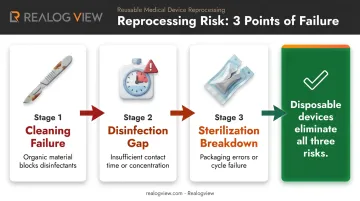
The primary rationale is infection control. Reusable devices require cleaning, disinfection, and sterilization between uses. Each step carries its own failure risk:
- Cleaning failures leave organic material that blocks disinfectants from reaching the surface
- Disinfection gaps occur when contact time, concentration, or technique falls short
- Sterilization breakdowns can result from improper packaging, cycle errors, or equipment failure
As the CDC notes directly, "failure to perform good cleaning can result in sterilization or disinfection failure, and outbreaks of infection can occur." Disposable devices sidestep these reprocessing variables — each patient encounter starts with a sterile device that has never been used.
Common Types and Examples of Disposable Medical Devices
Disposable medical devices cover a broad spectrum, from low-complexity consumables to tightly regulated, engineered tools. Major product categories include:
- Personal protective equipment (PPE): surgical gloves, N95 respirators, face masks, isolation gowns — the FDA confirms all cleared N95 respirators are labeled single-use
- Injection and infusion devices: hypodermic needles, syringes, prefilled syringes, IV catheters — the CDC explicitly directs that needles and syringes be used for one patient only
- Wound care products: bandages, surgical sponges, and dressings (note: FDA regulates wound dressings, though single-use designation varies by product)
- Diagnostic and laboratory supplies: specimen collection swabs, test kits, in vitro diagnostic reagents
More specialized examples include urinary and central venous catheters, surgical drapes, endotracheal tubes, tongue depressors, and biopsy needles. Each device type carries its own regulatory classification and use requirements.
That product diversity maps directly to regulatory complexity. A tongue depressor is a Class I device with minimal regulatory burden. A prefilled drug delivery system may be Class III and require extensive premarket approval. Manufacturing requirements, sterilization validation, and labeling obligations all follow device classification, not simply whether the item is single-use.
Key Benefits of Disposable Medical Devices in Healthcare
Infection Control
The infection burden in U.S. healthcare is substantial. Approximately 1 in 38 patients contracts at least one infection associated with healthcare each day. While disposable devices aren't the sole control measure, eliminating the reprocessing step removes one documented transmission pathway entirely.
Safety-engineered designs add another layer of protection for staff. The CDC estimates approximately 385,000 needlestick and sharps injuries occur annually among hospital-based personnel. Retractable needles, hinged scalpel guards, and pre-sterilized single-use instruments reduce exposure — though design alone doesn't guarantee safety without proper activation and training.
Performance Consistency
Reusable devices degrade. Repeated sterilization cycles can compromise material integrity, instrument calibration, or mechanical function over time. A disposable device arrives at its original, validated condition on every patient — no wear, no accumulated residue, no variability carried over from prior cycles.
Operational Efficiency
Facilities that rely on single-use devices eliminate:
- In-house sterilization departments and capital equipment
- Reprocessing labor and tracking of individual instruments
- Administrative overhead managing sterilization cycle records
For smaller facilities without dedicated sterile processing infrastructure, redirecting that labor and overhead toward direct patient care is a meaningful efficiency gain.
Emergency and Surge Capacity
Pre-packaged sterile single-use devices can be deployed rapidly during surge events without reprocessing bottlenecks. During the COVID-19 pandemic, individually packaged PPE and single-use respiratory devices allowed facilities to expand care rapidly without waiting on sterilization queues — a deployment speed that reusable inventories simply couldn't match.
Regulatory Standards Governing Disposable Medical Devices
U.S. FDA Framework
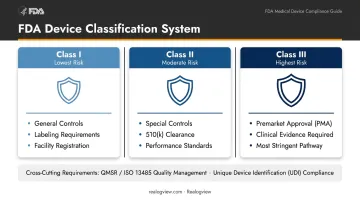
The FDA classifies medical devices into three risk-based tiers:
| Class | Risk Level | Example Controls |
|---|---|---|
| Class I | Lowest | General controls (labeling, registration) |
| Class II | Moderate | Special controls, 510(k) clearance |
| Class III | Highest | Premarket approval (PMA) |
Disposable devices fall across all three classes depending on their function and risk profile. Manufacturers must comply with the Quality Management System Regulation (QMSR), which became effective February 2, 2026, amending 21 CFR Part 820 and incorporating ISO 13485:2016 by reference. For digital records in regulated environments, 21 CFR Part 11 governs the integrity and traceability of electronic documentation.
UDI (Unique Device Identification) requirements add another compliance layer: the FDA's final rule requires labelers to place machine-readable UDI labels on device labels and packages, with device information submitted to the GUDID database.
International Standards
For European market access, devices must carry CE marking under EU Medical Device Regulation (MDR) 2017/745, which has applied since May 26, 2021. ISO 13485:2016 is the globally recognized quality management standard for medical device manufacturing and affects both supplier qualification and market entry decisions worldwide.
Temperature Documentation and Environmental Monitoring
These regulatory frameworks extend into storage and transport. For disposable devices with defined temperature ranges — diagnostic reagents, pre-filled drug delivery devices, biological sample collection kits — maintaining documented environmental conditions is a compliance requirement, not an optional best practice.
EU MDR Annex I requires relevant storage and handling conditions in device instructions, while Article 14 requires distributors to maintain manufacturer-specified conditions throughout the supply chain.
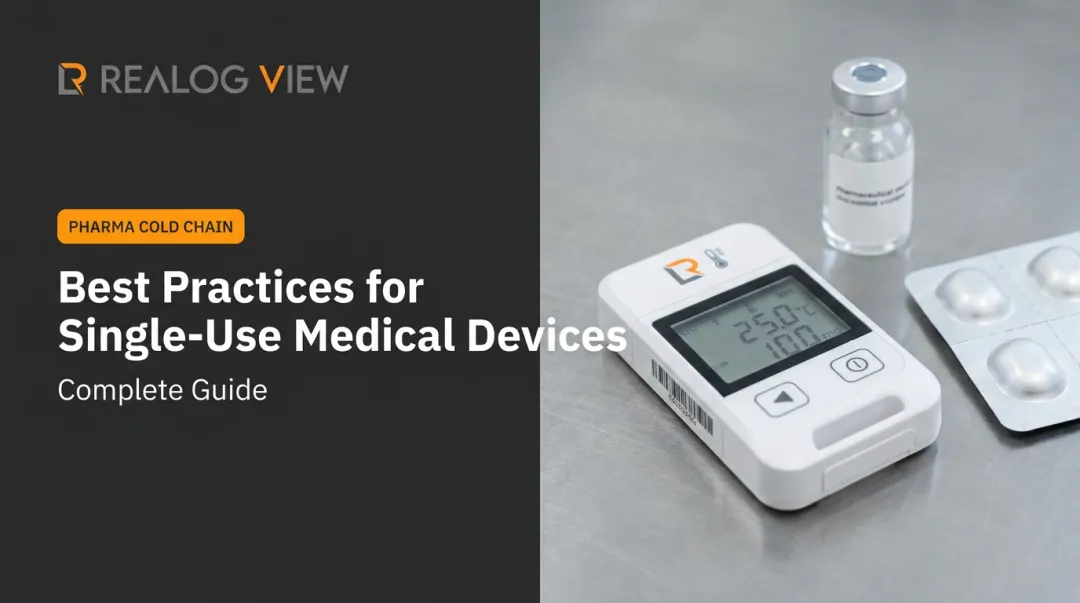
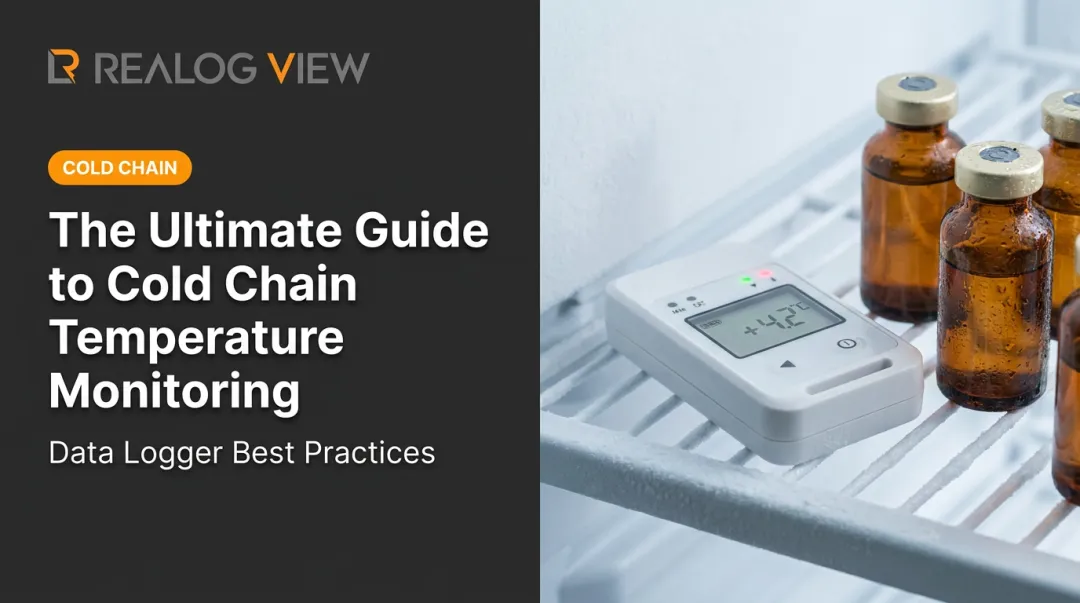
Environmental monitoring tools translate these requirements into auditable records. Realogview's TempTrail™ data loggers carry FDA 21 CFR Part 11 compliance and automatically generate PDF and CSV reports without external software — producing the tamper-proof, time-stamped temperature records that pharmaceutical companies and medical device manufacturers need for regulatory audits.
The TempTrail™ Glacial covers ultra-low ranges down to –85°C for cryogenic biological samples, while the TempTrail™ Classic and XL handle standard cold chain monitoring for diagnostic kits and drug delivery devices.
Consequences of Non-Compliance
Non-compliance carries concrete costs: product recalls, import alerts, regulatory holds, and the reputational damage that follows a public safety event. For temperature-sensitive disposables specifically, a single undocumented excursion can trigger a lot rejection or investigation. Rigorous documentation is, in practice, risk management — and auditors treat gaps in temperature records the same way they treat gaps in any other compliance requirement.
Key Considerations When Selecting Disposable Medical Devices
Quality and Certification
Start here. Procurement teams should verify:
- FDA clearance or approval for the specific intended use
- CE marking for products entering European markets
- ISO 13485 certification from the manufacturer
- Sterilization validation documentation appropriate to the device type
Regulatory status isn't transferable across product categories. A CE-marked product cleared for one indication doesn't automatically qualify for a different clinical use.
Supply Chain Reliability
Supply disruptions aren't recoverable in real time. A stockout of surgical gloves or IV catheters forces costly workarounds and clinical delays. Evaluate:
- Supplier track record and production capacity
- Geographic concentration risk in manufacturing
- Redundancy in sourcing arrangements
- Cold chain capabilities for temperature-sensitive products
Total Cost of Care
Supply reliability feeds directly into cost — and so does the way you calculate it. Unit price comparisons between disposable and reusable devices are misleading. ECRI's 2025 analysis found mixed economics across device categories, with reusables less costly in most reviewed categories — but that comparison excludes sterilization labor, capital equipment, reprocessing supply costs, potential HAI-related liability, and the cost of device performance degradation over time.
A genuine total-cost-of-care calculation accounts for all of these factors. The right answer varies by device type, facility context, and volume. Run the full numbers before defaulting to either option.

Challenges and Emerging Trends
Environmental Impact
Single-use plastics generate substantial waste. The AMA Journal of Ethics cites estimates of approximately 14,000 tons of waste per day from U.S. healthcare facilities, with plastics comprising a meaningful share — though no authoritative figure has isolated the disposable medical device share specifically.
Industry responses are developing:
- Bioplastics such as PHA show technical potential as alternatives to petroleum-derived plastics, though commercially adopted examples in regulated disposables remain limited
- Packaging recycling programs — a 2024 peer-reviewed study supports segregation and recycling of plastic packaging from medical device use as a viable pathway
- Sustainable design initiatives targeting material reduction without compromising sterility or performance
The tension between infection control (which favors single-use) and sustainability (which favors reuse) won't resolve cleanly. Both goals are legitimate, and the industry is working through device-by-device trade-offs rather than category-wide solutions.
Technology Trends
Several developments are reshaping the sector:
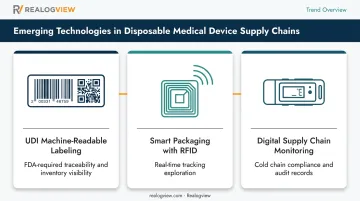
- UDI-enabled machine-readable labeling for inventory management and traceability is an FDA requirement, supporting improved supply chain visibility
- Smart packaging with RFID and QR codes is being explored for real-time tracking, though verified deployment in regulated disposable devices remains limited
- Digital supply chain monitoring — including temperature and humidity data loggers — is increasingly integrated into compliance workflows for temperature-sensitive products
Market Growth
Those technology shifts are unfolding against a backdrop of sustained market expansion. Two forces are driving global demand for disposable devices:
- Outpatient and home-based care growth is increasing demand for individually packaged devices suited to non-clinical settings
- Asia-Pacific expansion, identified by MarketsandMarkets as the fastest-growing regional market, reflects widening healthcare infrastructure, demographic growth, and rising economic development
Frequently Asked Questions
What is a disposable medical device?
A disposable medical device is a single-use item intended for one patient during one procedure and then discarded, per the FDA's FD&C Act definition. The primary rationale is infection prevention: eliminating any possibility of pathogen transmission between patients via the device.
What are examples of disposable medical devices?
Common examples include syringes, hypodermic needles, surgical gloves, face masks, IV catheters, wound dressings, exam gowns, and specimen collection swabs. More specialized examples include endotracheal tubes, biopsy needles, and urinary catheters.
Are disposable medical devices regulated by the FDA?
Yes. All disposable devices intended for medical use in the U.S. must meet applicable FDA quality, safety, and labeling requirements based on their device classification (Class I, II, or III) before entering the market.
What is the difference between disposable and reusable medical devices?
Disposable devices are designed for single-patient, single-use application and then discarded. Reusable devices withstand cleaning, disinfection, and sterilization for repeated use. The key trade-off is infection risk and reprocessing complexity on one side, versus higher unit cost and greater environmental waste on the other.
How do disposable medical devices affect the environment?
Single-use devices generate significant plastic and medical waste. The industry is responding with biodegradable materials, recyclable packaging research, and sustainable design initiatives, though widely adopted solutions in regulated devices remain limited for now.
Why is temperature monitoring important for disposable medical devices?
Many disposable devices — including diagnostic reagents, biological sample collection kits, and pre-filled drug delivery systems — must stay within defined temperature ranges to maintain sterility and efficacy. Environmental monitoring with documented records is a regulatory requirement under FDA and EU MDR frameworks, making accurate data loggers essential for manufacturers and distributors handling these products.