Best Temperature Data Loggers with Alerts (2026): Top Features & Buyer’s Guide
Choosing the best temperature data loggers with alerts can be overwhelming, but understanding how to choose a temperature data logger is essential for ensuring compliance, preventing product loss, and maintaining quality in cold chain operations.
Whether you operate in food, pharmaceuticals, laboratories, or logistics, the right data logger can make the difference between compliance and costly temperature excursions.
Why Choosing the Right Temperature Data Logger Matters
Global organizations like the World Health Organization (WHO) emphasize strict temperature control in cold chain logistics to ensure product safety. A poorly selected data logger can lead to:
Missed temperature excursions
Compliance violations
Product spoilage
Inaccurate reporting
As discussed in our guide on temperature excursion prevention, even small monitoring gaps can result in major losses.
Key Features to Look For in a Temperature Data Logger
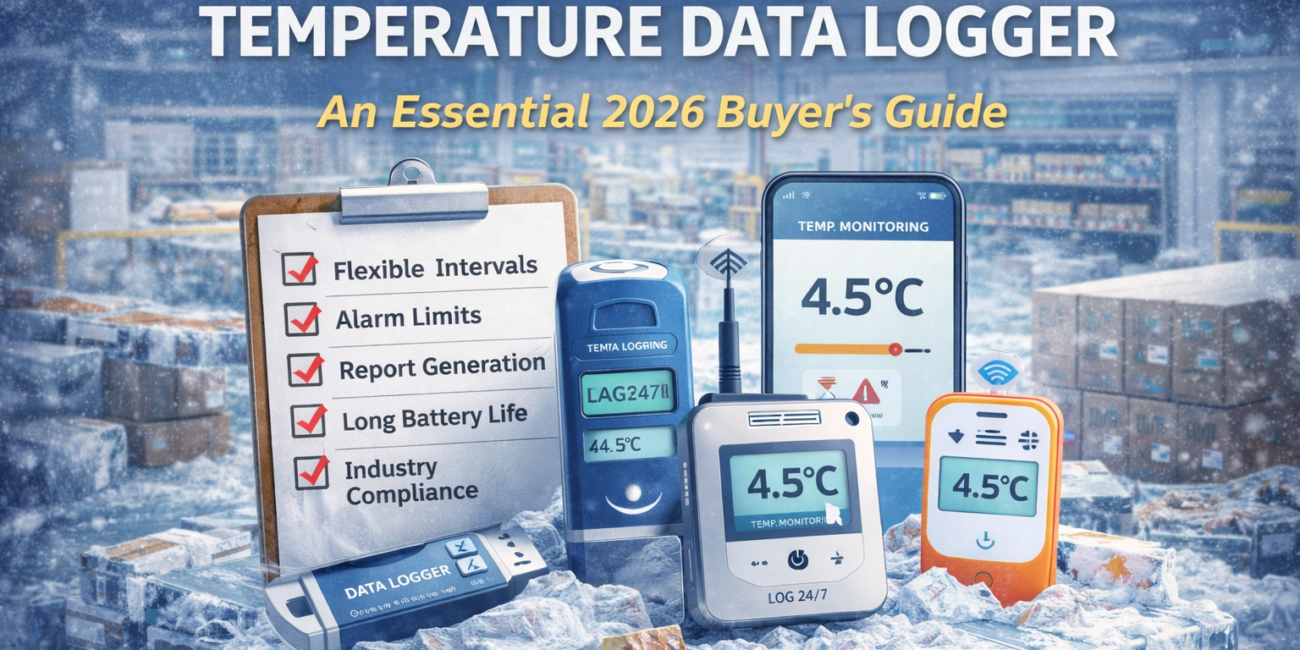
When evaluating options, focus on these critical features:
✅ Logging Interval Flexibility
Choose a logger that allows configurable intervals (from seconds to hours) based on product sensitivity.
✅ Alarm Limits
High and low temperature alerts help you act quickly before damage occurs.
✅ Accuracy & Calibration
Ensure the device meets industry standards and includes calibration support.
✅ Data Storage & Reports
Look for automatic PDF/CSV report generation for audit readiness.
✅ Battery Life
Long battery life is critical for transportation and remote monitoring.
✅ Time Settings
UTC and daylight saving configuration ensure accurate time-stamped data.