
The Crucial Role of Temperature Data Loggers in Safe Vaccine Storage
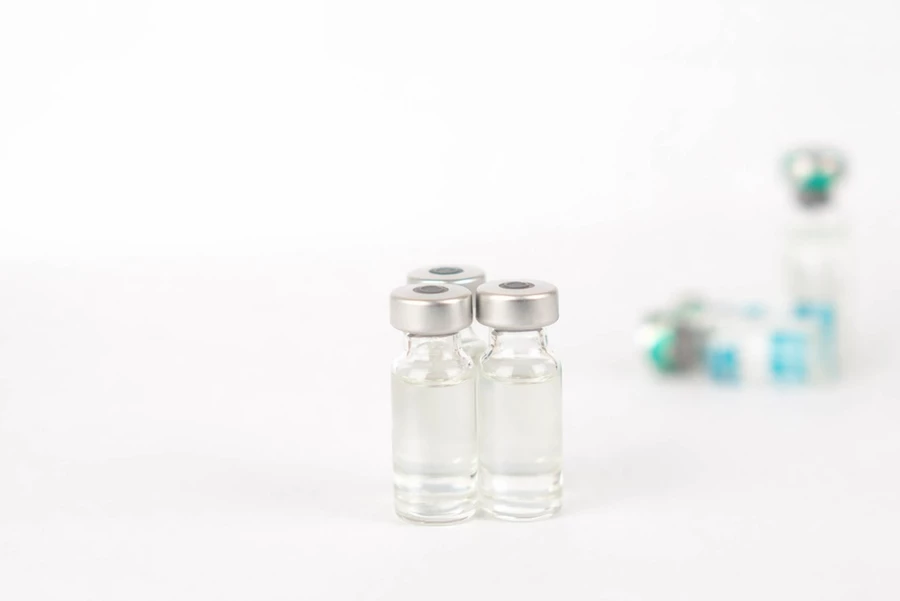
Vaccine storage requires strict temperature control because even brief excursions can reduce potency and compromise public health. A temperature data logger provides continuous, auditable proof that vaccines stayed within required conditions.
- Supports safe refrigerated, frozen, and ultra-low storage
- Records time-stamped temperature history
- Helps detect excursions missed by manual checks
- Creates reports for audits and regulatory review
- Reduces waste, uncertainty, and compliance risk
Vaccines aren’t ordinary inventory. They’re sensitive biological products designed to protect people from serious disease. Their effectiveness depends on strict environmental control from the time they’re manufactured until the moment they’re administered.
If vaccines encounter temperatures outside their approved range, this can reduce their potency. In some cases, the problem can’t be seen by looking at the vial, which makes dependable temperature monitoring essential.
For clinics, pharmacies, hospitals, public health departments, and pharmaceutical logistics teams, the question is not simply whether vaccines were placed in a refrigerator or freezer.
The more important question is whether the vaccines remained within the correct temperature range for the entire storage or shipping period.
A temperature data logger provides the evidence to answer that question with confidence.
Why Vaccine Storage Requires Strict Temperature Control
The Centers for Disease Control and Prevention has long emphasized that proper vaccine storage and handling are critical to protecting individuals and communities from vaccine-preventable diseases.
Vaccine quality is a shared responsibility across the entire chain, from manufacturing to administration.
Most refrigerated vaccines must be stored between 2°C and 8°C, or 36°F and 46°F, with many guidance documents recommending a target of 5°C, or 41°F, to provide a safety buffer. Other vaccines require frozen or ultra-low-temperature conditions, depending on the product and manufacturer’s instructions. These requirements may apply during long-term storage, short-term transport, emergency transfers, or temporary storage at administration sites.
This is why vaccine storage cannot rely on assumptions. A refrigerator may appear to be working, but temperatures inside the unit can vary by shelf, location, door-opening frequency, power stability, airflow, and equipment age.
During transport, the risks increase even further. Packages may sit on loading docks, encounter delays, or move through changing ambient conditions. Without continuous records, these risks may go unnoticed until it is too late to prove that the vaccines remained safe for use.
The Limits of Manual Temperature Checks
Manual temperature checks still have a place in many quality programs, but they’re not enough. A staff member who checks a refrigerator twice a day only sees the temperature at two moments. That approach can miss overnight excursions, weekend failures, short equipment malfunctions, and temperature spikes during busy clinic hours.
For example, a refrigerator could rise above its approved range for several hours overnight and return to normal by morning. A manual log might show an acceptable reading, even though the vaccine stock experienced a potentially damaging event. The same problem can occur in frozen and ultra-low-temperature environments, where the consequences of delayed detection may be even more serious.
A data logger solves this problem by recording temperature at set intervals. Instead of offering a snapshot, it creates a time-stamped history. That history is essential for deciding whether vaccines can remain in use, must be quarantined, or require review by the manufacturer or health authority.
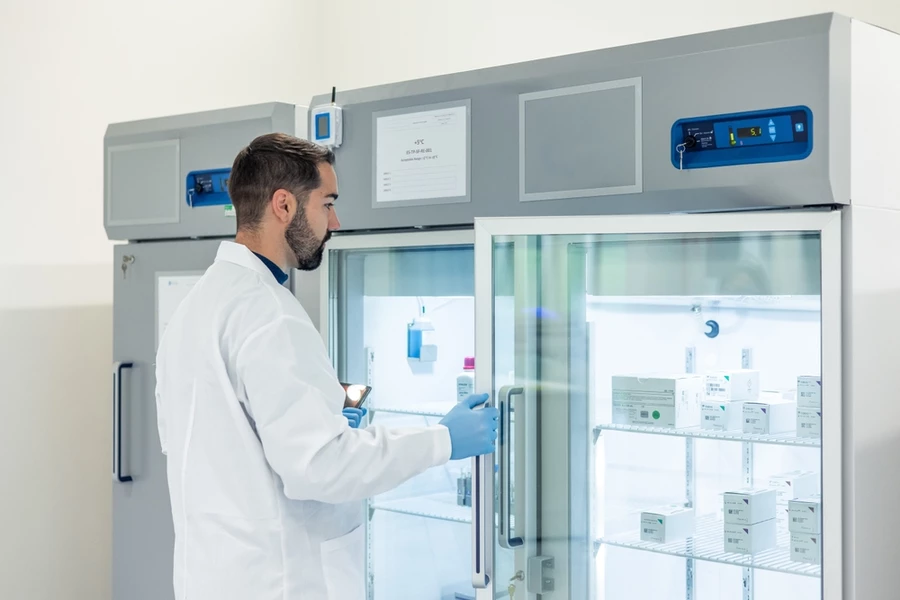
What a Temperature Data Logger Does
A temperature data logger is a compact electronic device that measures and records temperature over time.
In vaccine applications, it’s typically placed inside the storage unit, transport package, thermal shipper, or other controlled environment near the vaccine load. Depending on the device, it may record readings every few minutes and store them for later review.
The most useful loggers do more than collect raw data. They provide clear reports, identify minimum and maximum temperatures, show when those temperatures occurred, and help users determine whether an excursion took place.
The CDC’s vaccine storage and handling guidance includes recommendations for storage units, temperature monitoring equipment, emergency planning, and staff training. For Vaccines for Children providers, state-level guidance based on CDC requirements commonly calls for certified, calibrated continuous temperature monitoring devices, also known as digital data loggers, in each unit that stores publicly funded vaccine.
In practice, this makes the temperature data logger both a monitoring tool and a compliance tool. It helps teams see what happened, when it happened, and whether corrective action is needed.
Reliable Records for Public Health and Regulatory Confidence
For vaccine programs, documentation isn’t just paperwork. It’s part of product safety.
When a temperature excursion occurs, healthcare teams need reliable records to evaluate the event. How warm or cold did the unit become? How long did the excursion last? Which vaccine lots were affected? Was the issue caused by equipment failure, door access, packaging, transport delay, or user error?
A dedicated data logger provides the auditable proof needed to answer these questions. Time-stamped records support internal quality assurance, manufacturer consultations, regulatory inspections, and public health reporting. They also help prevent two costly mistakes: using compromised vaccines or discarding vaccines unnecessarily.
Automated PDF reports are especially valuable in this process. A clear report can summarize the shipment or storage period, display temperature graphs, show excursion markers, and provide a record that can be stored with batch, shipment, or facility documentation. For busy healthcare and logistics teams, this reduces administrative burden while improving data integrity.
Low-Temperature and Dry Ice Vaccine Monitoring
Not every vaccine storage environment is the same, and not every logger is built for the same job.
Standard refrigerated applications may use a logger designed for the 2°C to 8°C range. Frozen applications require devices rated for lower temperatures. Ultra-low-temperature shipments may require specialized monitoring equipment that can remain accurate and functional in extreme conditions.
This is where a low temperature data logger becomes important. It’s designed to monitor conditions below standard refrigeration ranges and may be used in frozen or ultra-cold vaccine distribution.
For shipments that rely on dry ice, a dry ice data logger may be required to document temperatures in packaging that can reach extremely low conditions. Some COVID-19 vaccine handling guidance, for example, has referenced ultra-low shipping and storage ranges involving dry ice thermal containers for certain products and situations.
Using the wrong logger can create a serious documentation gap. A device that isn’t rated for the expected temperature range may fail, lose accuracy, or stop recording. For vaccine logistics, the logger must match the storage environment, shipment duration, required accuracy, and reporting needs of the quality program.
Best Practices for Data Logger Use
Effective temperature monitoring starts with choosing the right equipment. A logger should be rated for the required temperature range, supported by appropriate calibration documentation, and easy for staff to use. It should also provide reports that quality teams can understand quickly and retain for audits.
Placement also matters. A logger should monitor the vaccine environment, not simply the air near a door, wall, vent, or cold plate. In storage units, it should be positioned according to the facility’s vaccine storage policy and public health guidance. In shipments, it should be placed where it can accurately represent the conditions experienced by the vaccine load.
A temperature data logger is most valuable when its information leads to action. Staff should know how to respond to alarms, how to quarantine affected vaccines, who to notify, and how to document corrective steps. Training is essential because even the best monitoring system depends on people understanding what the data means.
Protecting Vaccine Integrity from Storage to Administration
Safe vaccine storage depends on control, visibility, and proof. Refrigerators, freezers, insulated shippers, and dry ice packages all play important roles, but they can’t confirm vaccine integrity by themselves.
A data logger gives healthcare and logistics teams a continuous, objective record of vaccine conditions. It helps detect excursions, supports compliance, reduces uncertainty, and protects patients from the risk of ineffective immunization.
For organizations responsible for vaccine storage and distribution, the right temperature data logger isn’t optional equipment. It’s a critical part of public health safety, quality assurance, and regulatory readiness.


