5 Proven Ways to Tackle Temperature Excursion and Prevent Losses
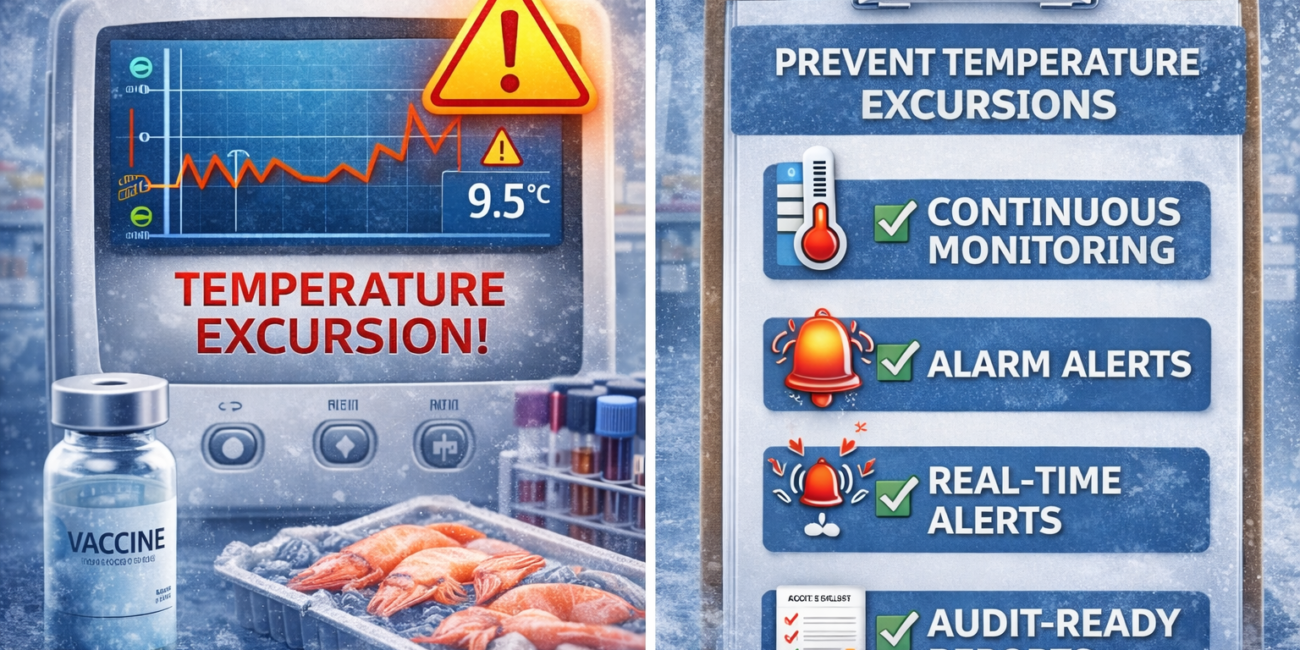
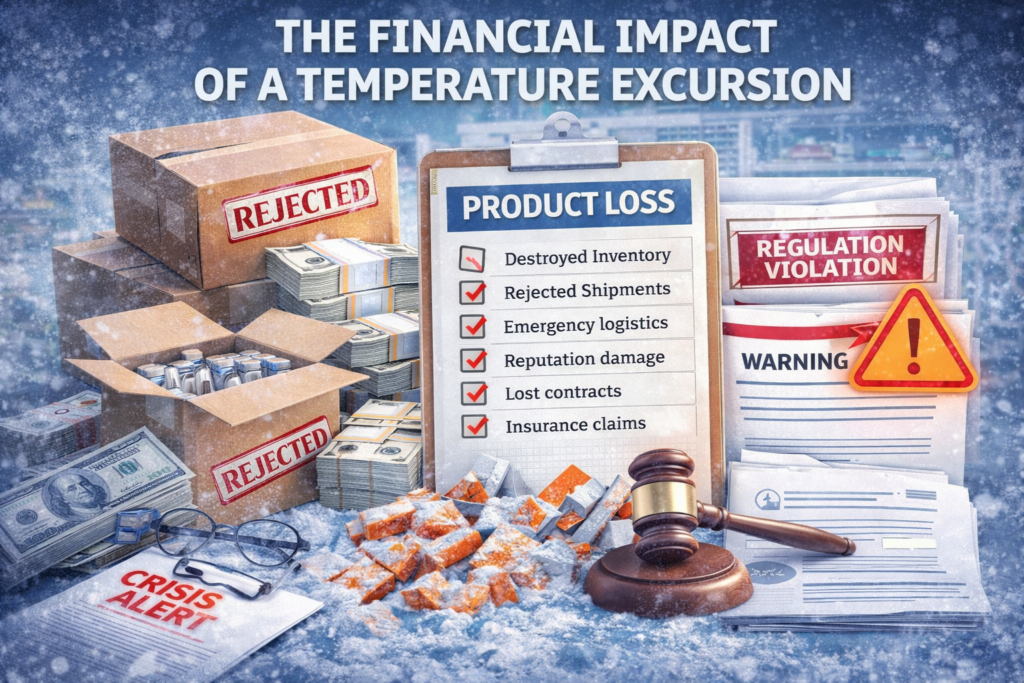
A temperature excursion in the cold chain can result in spoiled food, compromised pharmaceuticals, regulatory violations, and significant financial loss.
In 2026, regulatory scrutiny around cold chain temperature excursions continues to increase — especially in food safety, pharmaceutical distribution, and vaccine storage.
Understanding what a temperature excursion is — and how to prevent it — is essential for compliance and operational protection.
What Is a Temperature Excursion?
A temperature excursion occurs when a product moves outside its validated temperature range for a defined period of time.
Refrigerated pharmaceuticals exposed to heat during transport
Even brief deviations can affect product stability, safety, and regulatory compliance. Vaccines exceeding recommended temperature ranges can lose effectiveness, as outlined in CDC vaccine storage guidelines.
Common Causes of Temperature Excursions
Temperature excursions often happen due to operational gaps rather than equipment failure.
Power Interruptions: Unexpected outages can cause rapid temperature spikes in storage facilities.
Human Error: Doors left open, improper loading, or missed manual checks.
Transportation Delays: Extended transit times increase risk during distribution.
What Should You Do If a Temperature Excursion Occurs?
Isolate affected products.
Review time-stamped temperature data.
Conduct stability assessment.
Document corrective action.
Implement preventive measures.
Fast access to digital temperature records makes investigation more efficient and defensible during audits.
Frequently Asked Questions (FAQ)
What qualifies as a temperature excursion?
Any deviation outside a product’s validated temperature range for a defined period.
How long can a temperature excursion last before products are compromised?
It depends on product stability data and regulatory guidelines.
Are manual logs sufficient for excursion prevention?
Manual logs often miss short-duration spikes and are less reliable for compliance audits.
How can I reduce temperature excursion risk?
By implementing continuous monitoring, alarm alerts, and proper logging intervals.
Conclusion
Temperature excursions are one of the most costly risks in the cold chain.
With increasing regulatory expectations in 2026, businesses must implement proactive temperature monitoring systems to protect product integrity and remain compliant.
Preventing excursions is not just about avoiding loss — it’s about safeguarding reputation, compliance, and customer trust.